


Best Copilot Rank Tracking Tools 2026
The best Copilot rank tracking tools in 2026 are Superlines, AIClicks, SE Ranking Visible, Rankability, Peec AI, Otterly AI, Profound, Writesonic GEO, AthenaHQ, Semrush AI Visibility, Ahrefs Brand Radar, and Scrunch AI. These platforms monitor how your brand appears in Microsoft Copilot's AI-generated responses and help you improve visibility where competitors are already winning.
Microsoft Copilot is integrated into Windows, Edge, Microsoft 365, and Bing, giving it access to hundreds of millions of users who may never open a standalone chatbot. Yet most brands focus their AI visibility tracking on ChatGPT and Google AI Overviews while ignoring Copilot entirely. That blind spot is a problem: Conductor's 2026 AEO/GEO Benchmarks Report found that AI referral traffic now accounts for 1.08% of all website traffic and is growing roughly 1% month over month. Copilot contributes a meaningful share of that traffic, particularly in enterprise and B2B contexts where Microsoft's ecosystem dominates.
This guide covers the 12 best tools for tracking your brand's rank and visibility inside Copilot, along with what to look for, how Copilot differs from other AI platforms, and practical steps to improve your position.
TL;DR
- Microsoft Copilot is embedded across Windows, Edge, and Microsoft 365, reaching users who never open a standalone chatbot, making it a critical AI search surface for brands.
- Most AI visibility tools now support Copilot tracking, but coverage depth varies significantly: some track mentions only, others track citations, sentiment, and competitive share of voice.
- SE Ranking's AI Mode study found that domain authority (measured by traffic volume) is the single strongest predictor of AI citations, with high-traffic sites earning 3x more citations than low-traffic ones.
- The best Copilot rank trackers combine multi-platform coverage (Copilot plus ChatGPT, Perplexity, Gemini, and others) with actionable optimization workflows, not just dashboards.
- Brands that start tracking Copilot visibility now gain a first-mover advantage, since most competitors are still focused exclusively on ChatGPT and Google.
Our Selection Methodology
We evaluated 12 Copilot rank tracking platforms using five critical criteria that determine long-term success in AI search optimization:
1. Copilot-Specific Depth: Does the tool track Copilot as a distinct platform with prompt-level visibility data, or does it lump Copilot in with Bing?
2. Multi-Platform Coverage: Copilot tracking is most valuable when combined with ChatGPT, Perplexity, Google AI Mode, Gemini, and other platforms for cross-platform comparison.
3. Data Methodology: Does the tool capture real interface answers or rely on API outputs? A study referenced by Matt Diggity from Surfer found that API-based data can differ significantly from what real users see.
4. Actionable Insights: The best tools surface specific opportunities: which queries to target, which pages to optimize, and which competitors to study, not just dashboards.
5. Scalability and Pricing: Transparent pricing with growth-friendly tiers, multi-brand support, and reasonable cost per tracked prompt.
Why Should You Track Your Brand's Visibility in Microsoft Copilot?
Copilot is not just another chatbot. It is deeply integrated into the tools that hundreds of millions of knowledge workers use every day: Windows search, the Edge browser sidebar, Microsoft 365 apps, and Bing. When someone asks Copilot "what's the best project management tool for remote teams?" or "which CRM should a mid-size SaaS company use?", the answer shapes purchasing decisions before the user ever visits a website.
A January 2026 report from Conductor found that ChatGPT drives 87.4% of all AI referral traffic, but the remaining 12.6% is split across Copilot, Perplexity, Gemini, Claude, and others. That 12.6% is growing fast, and Copilot's share is disproportionately high in enterprise and B2B verticals where Microsoft's ecosystem is the default.
Here is why Copilot tracking matters:
- Enterprise reach: Copilot is bundled with Microsoft 365, which has over 400 million paid seats. These users encounter Copilot in their daily workflow without actively seeking out an AI chatbot.
- Bing integration: Copilot uses Bing's search index for grounding, which means your Bing SEO performance directly influences your Copilot visibility. If you are not indexed well on Bing, you are likely invisible in Copilot.
- Different citation patterns: Each AI platform has its own "editorial personality." Copilot may cite different sources than ChatGPT for the same query. Tracking only one platform gives you an incomplete picture.
- Competitive blind spot: Most brands are not tracking Copilot at all, which means early movers can establish visibility before the space gets crowded.
How Does Copilot Decide What to Cite?
Copilot uses Bing's search index combined with large language model reasoning to generate responses. This means two factors drive your Copilot visibility:
- Bing indexing and ranking: Unlike ChatGPT (which primarily uses its own web browsing and training data), Copilot leans heavily on Bing search results. If your pages rank well on Bing, they are more likely to be cited by Copilot.
- Content structure and authority: SE Ranking analyzed 2.3 million pages across 295,485 domains and found that domain traffic is the strongest predictor of AI citations (SHAP value: 0.63). Sites with over 1.16 million monthly visitors earned an average of 6.4 citations per query, compared to just 2.4 for sites with fewer than 2,700 visitors. Referring domains were the second strongest factor, with a SHAP value of 0.56 for Google AI Mode and 1.21 for ChatGPT.
Practical steps to improve your Copilot visibility:
- Submit your sitemap to Bing Webmaster Tools. Many brands optimize for Google but forget Bing entirely.
- Use IndexNow to notify Bing of content updates in real time.
- Implement server-side rendering (SSR) if your site uses JavaScript frameworks, since Bing's crawler handles JS less reliably than Google's.
- Add structured data markup (JSON-LD) to help Copilot understand your content's context and entities.
- Keep content fresh. SE Ranking's study found that pages updated within the last two months earned 5.0 citations on average, compared to 3.9 for pages older than two years.
What Should You Look for in a Copilot Rank Tracking Tool?
Not all AI visibility tools track Copilot equally. Here is what to evaluate:
- Copilot-specific coverage: Does the tool track Copilot as a distinct platform, or does it lump Copilot data in with Bing? You need prompt-level visibility data specifically for Copilot responses.
- Real interface data vs. API data: Some tools query AI platforms through APIs, which can return different results than what real users see. A study referenced by Matt Diggity from Surfer found that API-based AI visibility data can differ significantly from answers scraped from real AI interfaces.
- Multi-platform tracking: Copilot tracking is most valuable when combined with ChatGPT, Perplexity, Google AI Mode, Gemini, and other platforms so you can compare performance across the full AI search landscape. For a broader comparison, see our guide to the best AI visibility tools in 2026.
- Citation tracking: Beyond brand mentions, does the tool track when Copilot links to your website? Citations (links) and mentions (brand name references) are different signals with different implications.
- Competitive benchmarking: Can you see which competitors appear in Copilot responses for your target queries?
- Actionable insights: The best tools do not just show you data. They surface specific opportunities: which queries to target, which pages to optimize, and which competitors to study.
12 Best Copilot Rank Tracking Tools in 2026
1. Superlines
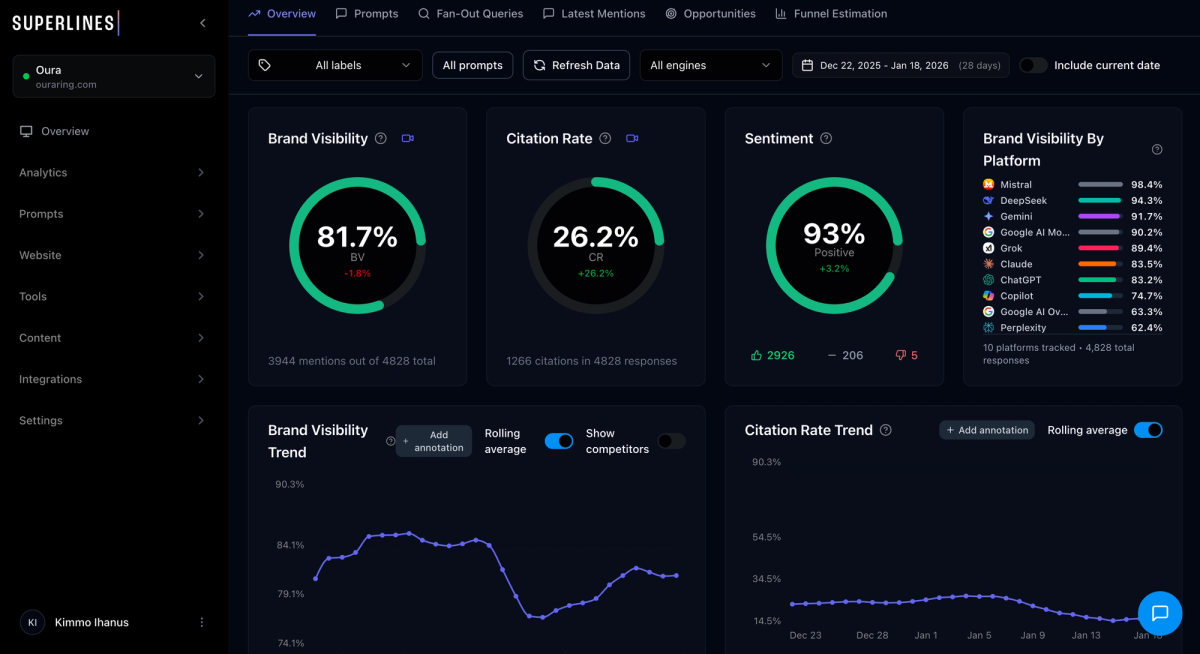
Superlines is a GEO platform that tracks brand visibility across 10 AI engines, including Microsoft Copilot, ChatGPT, Perplexity, Google AI Mode, Google AI Overviews, Gemini, Claude, Mistral, DeepSeek, and Grok. It uses real answer data from live AI interfaces rather than API outputs.
Key features for Copilot tracking:
- Tracks brand mentions, citations, sentiment, and competitive share of voice in Copilot responses alongside 9 other AI platforms
- Citation and competitor gap analysis shows which pages competitors get cited for in Copilot and where you are missing
- Search Query Fan-Out insights reveal the background web searches Copilot runs when answering user prompts
- AI Traffic and AI Bot analytics monitor how Microsoft's AI crawlers visit your site
- MCP server access lets your own AI assistants query the same visibility dataset
Pricing: Starts at €89/month. Higher tiers add more engines, prompts, and advanced features.
Limitations: Advanced features like full historical data require Enterprise or Agency plans. Entry-level plans have more restrictive prompt volumes.
2. AIClicks
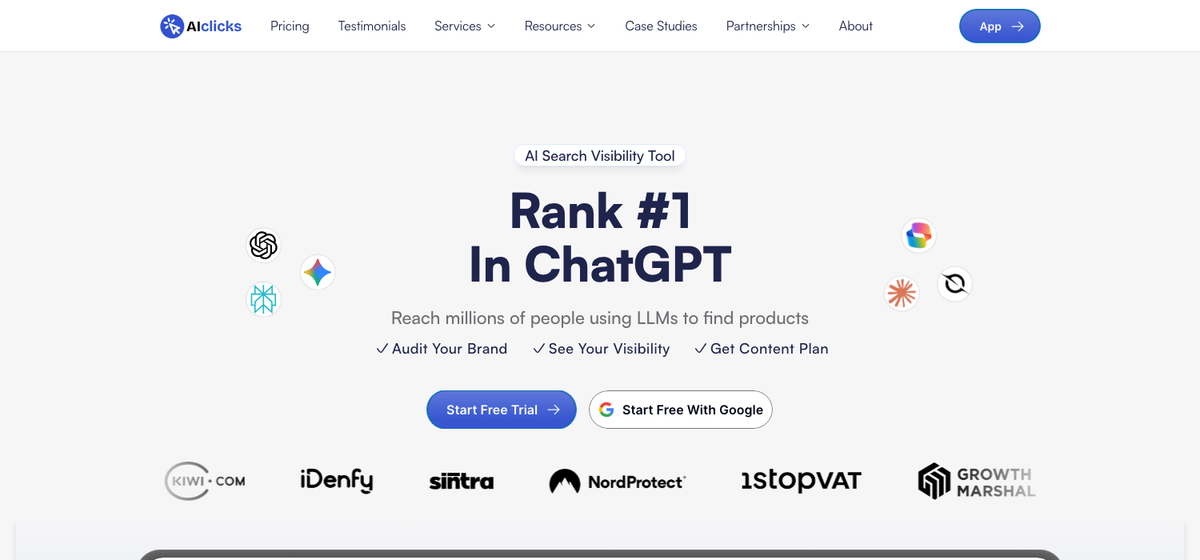
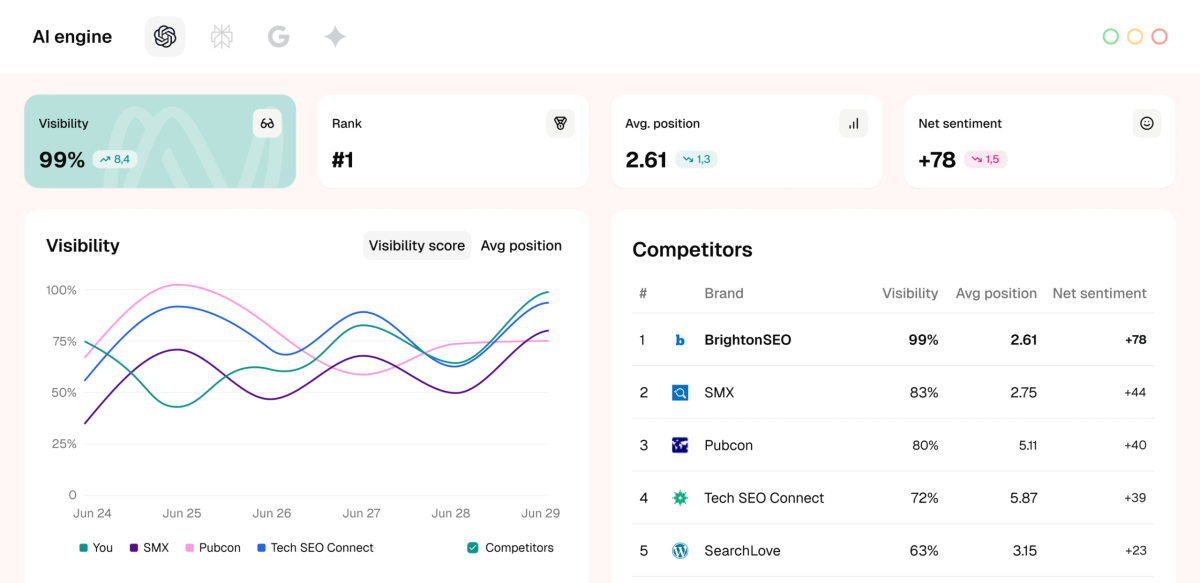
AIClicks offers dedicated Copilot rank tracking with a comparison-focused approach. Their blog content on Copilot tracking is among the most cited in the space.
Key features for Copilot tracking:
- Dedicated Copilot tracking dashboard with prompt-level visibility data
- Comparison tables showing your brand vs. competitors across Copilot responses
- Weekly playbook with a 5-step workflow for teams to follow
- Technical optimization tips specific to Copilot (IndexNow, SSR, XML sitemaps)
Pricing: Plans start at $79/month (Starter) with tiered options based on prompt volume.
Limitations: Smaller platform with less market presence than established competitors. Feature set is narrower than full GEO platforms.
3. SE Ranking Visible
SE Ranking's Visible platform combines traditional SEO rank tracking with AI visibility monitoring, including Copilot.
Key features for Copilot tracking:
- Tracks brand visibility across Copilot, ChatGPT, Perplexity, and Google AI Overviews
- Integrates AI visibility data with traditional Bing and Google ranking data, useful since Copilot relies on Bing's index
- Published one of the most comprehensive AI citation studies (2.3M pages analyzed), giving their optimization recommendations strong data backing
- Competitive benchmarking across both traditional and AI search
Pricing: AI visibility features available as part of SE Ranking plans starting at $99/month (Basic plan with 150 prompts and 3 brands).
Limitations: AI visibility is an add-on to their core SEO platform, so the GEO-specific features are less deep than purpose-built tools.
4. Rankability
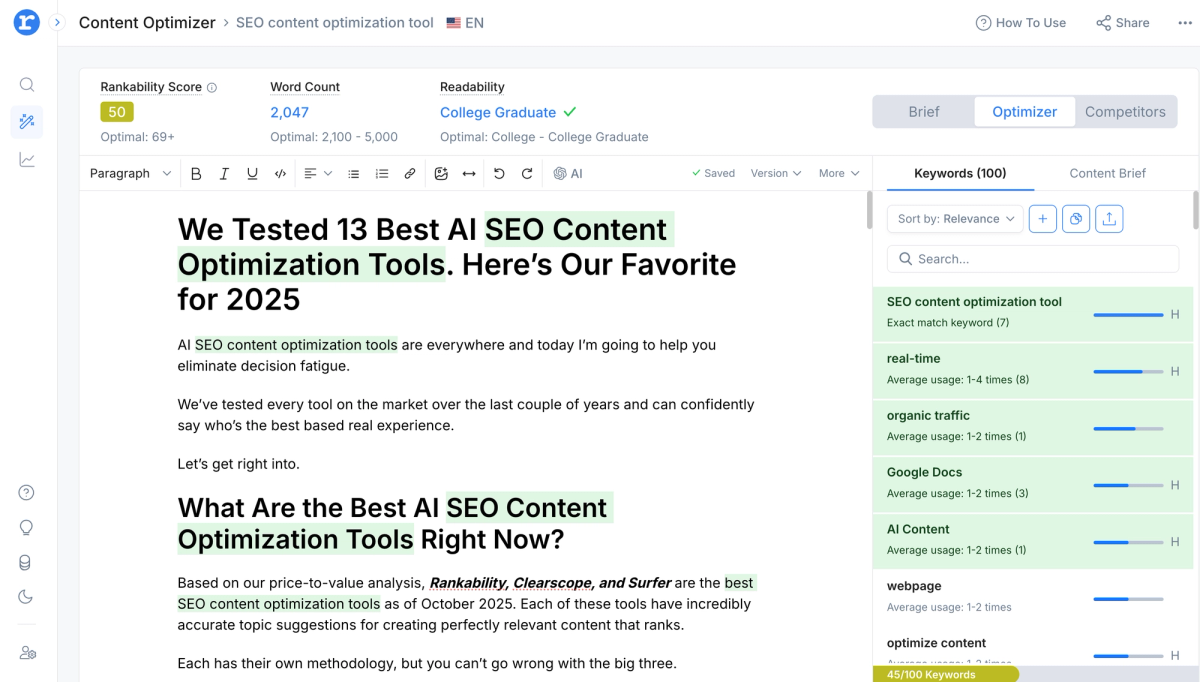
Rankability positions itself as an AI search analyzer with broad platform coverage, including Copilot.
Key features for Copilot tracking:
- Tracks visibility across Copilot and other major AI platforms
- Pricing comparison and funding status data for competitive analysis
- 97-point GEO checklist for optimization
- Evaluation criteria include platform coverage, data methodology, and actionability
Pricing: Starts at $199/month (Core plan).
Limitations: Higher entry price point. Some advanced features are reserved for higher tiers.
5. Peec AI
Peec AI focuses on real-time alerting and competitive benchmarking across AI search engines, including Copilot.
Key features for Copilot tracking:
- Real-time alerts when brand visibility changes in Copilot for specific prompts
- Multi-platform coverage including ChatGPT, Perplexity, Gemini, and Copilot
- Source attribution analysis showing which websites influence Copilot's responses about your brand
- Regional tracking for international brands
Pricing (updated February 2026): Starter: €89/month (3 AI engines, 50 tracked prompts, unlimited users & brands, daily tracking, MCP access), Pro: €199/month (100 prompts), Enterprise: custom pricing (300+ prompts). Annual billing saves 15%. Note: tier names changed from Basic/Plus/Business to Starter/Pro/Enterprise.
Limitations: Limited optimization recommendations compared to full GEO platforms. Uses API output rather than real interface data.
6. Otterly AI
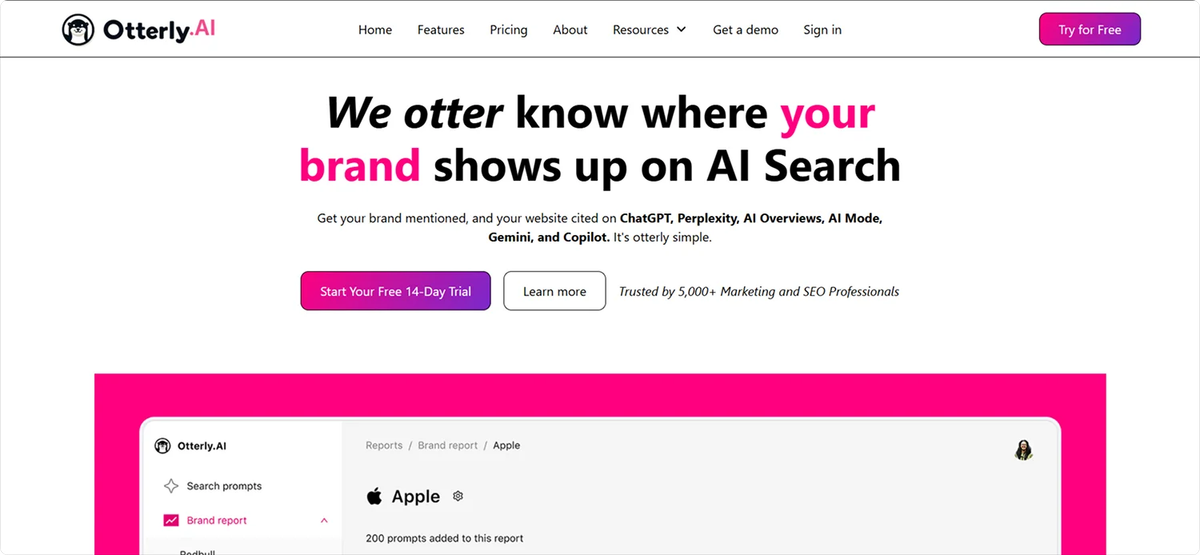
Otterly AI is a practical GEO tool focused on prompt-level AI rankings with Copilot support.
Key features for Copilot tracking:
- Prompt discovery tool that transforms traditional keywords into conversation-based queries for Copilot
- Automated link citation detection for Copilot responses
- Brand Visibility Index tracking across Copilot and other AI platforms
- GEO audit with SWOT analysis and tactical recommendations
Pricing (updated February 2026): Lite: $29/month (15 prompts, up from 10), Standard: $189/month (100 prompts), Premium: $489/month (400 prompts). The previous "Pro" tier at $989/month has been replaced by Premium at a significantly lower price point. Annual billing saves 15%. Note: AI Mode and Gemini tracking are paid add-ons.
Limitations: Significant price jump between tiers. Uses API output rather than real interface data.
7. Profound
Profound is an enterprise-focused GEO platform with Copilot tracking as part of its multi-engine coverage.
Key features for Copilot tracking:
- Answer Engine Insights covering Copilot alongside ChatGPT, Perplexity, and Gemini
- Agent Analytics reveals how AI crawlers (including Microsoft's) access your content
- Shopping Intelligence for e-commerce brands tracking product visibility in Copilot
- Conversation Explorer for monitoring trending topics across AI platforms
Pricing (updated February 2026): Profound no longer displays public pricing on its website. Based on third-party sources, plans appear to start around $499/month. Contact their sales team for current pricing and plan details. For a full comparison, see our best Profound alternatives guide.
Limitations: Many advanced features locked to higher tiers. Heavier implementation requiring more technical resources.
8. Writesonic GEO
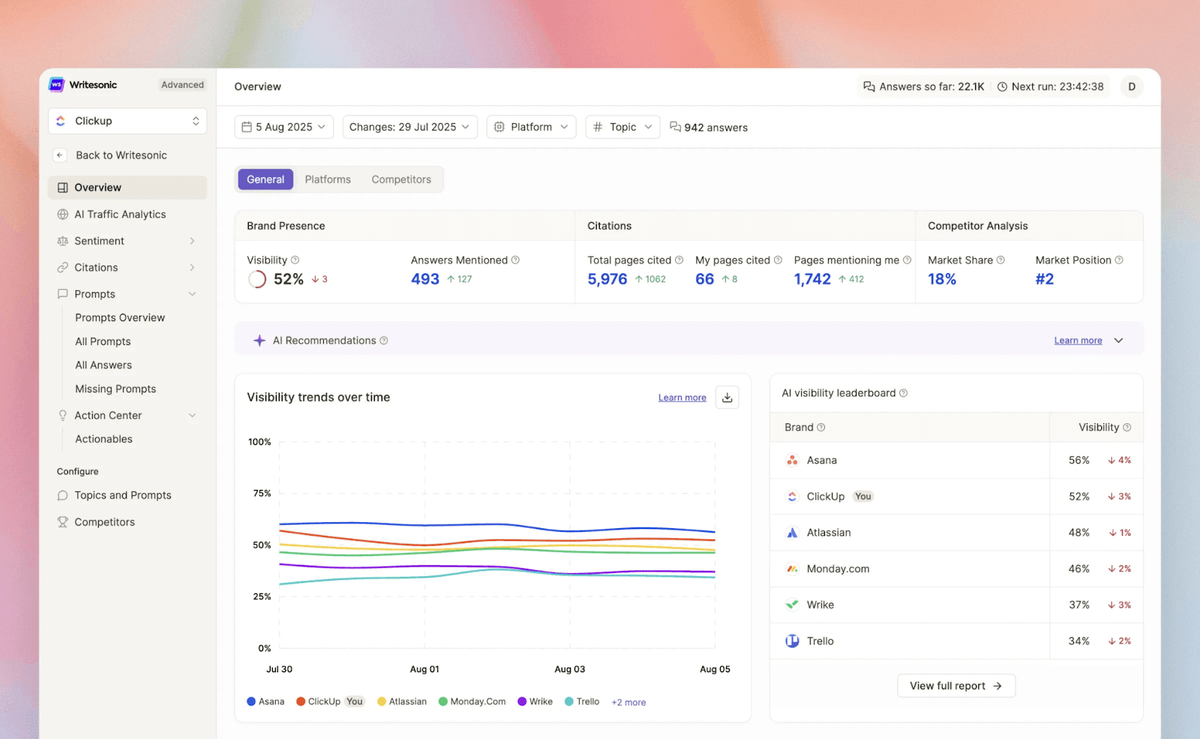
Writesonic GEO combines AI visibility tracking with content creation tools, including Copilot monitoring.
Key features for Copilot tracking:
- Brand Presence Explorer with visibility scoring across Copilot and other platforms
- AI Traffic Analytics tracking visits from Microsoft's AI crawlers
- Integrated content creation and optimization tools for acting on Copilot visibility insights
- Citation gap analysis with actionable recommendations
Pricing (updated February 2026): Writesonic has restructured into five tiers: Lite ($49/month), Standard ($99/month), Professional ($249/month), Advanced ($499/month), and Enterprise (custom). GEO features require the Professional plan or above ($249/month minimum).
Limitations: GEO features limited to higher-tier plans. Newer platform with less market presence.
9. AthenaHQ
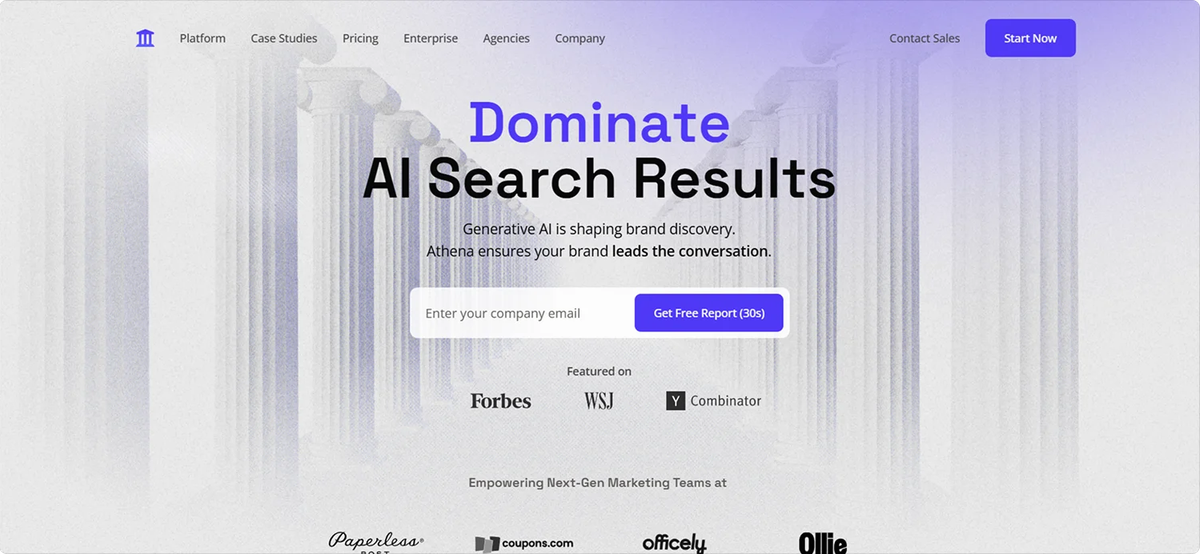
AthenaHQ was founded by former Google Search and DeepMind experts and offers Copilot tracking as part of its multi-engine coverage.
Key features for Copilot tracking:
- Multi-engine coverage including Copilot, ChatGPT, Gemini, Claude, and Perplexity
- Competitor benchmarking with side-by-side visibility comparisons in Copilot
- AI-generated Action Center with tailored recommendations
- GA4 integration for full-funnel AI search analytics
Pricing (updated February 2026): AthenaHQ has restructured to two tiers. Self-Serve starts at $95/month for the first month (67% off the $295 list price), with 3,600 credits per month. Enterprise pricing is custom. Annual billing saves 17%. For a deeper comparison, see our best AthenaHQ alternatives guide.
Limitations: Credit system can become expensive with extensive Copilot monitoring. Uses API output rather than real interface data.
10. Semrush AI Visibility
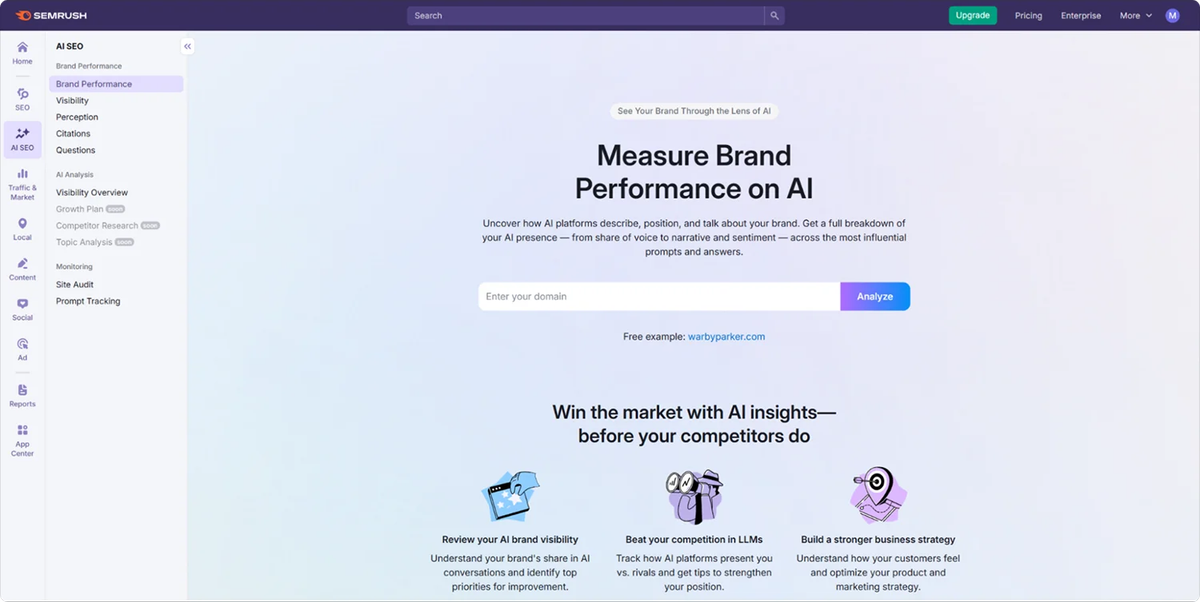
Semrush has extended its market-leading SEO platform into AI visibility tracking, including Copilot. For a full comparison of alternatives, see our best Semrush alternatives for AI Search guide.
Key features for Copilot tracking:
- AI Share of Voice analysis across Copilot and other LLMs
- Brand sentiment analysis showing how Copilot describes your brand
- Strategic recommendations for content and positioning
- Query intelligence revealing real questions users ask Copilot about your brand
Pricing: $99/month per domain for the standalone AI Toolkit.
Limitations: Per-domain pricing gets expensive for multi-brand portfolios. Uses API output rather than real interface data.
11. Ahrefs Brand Radar
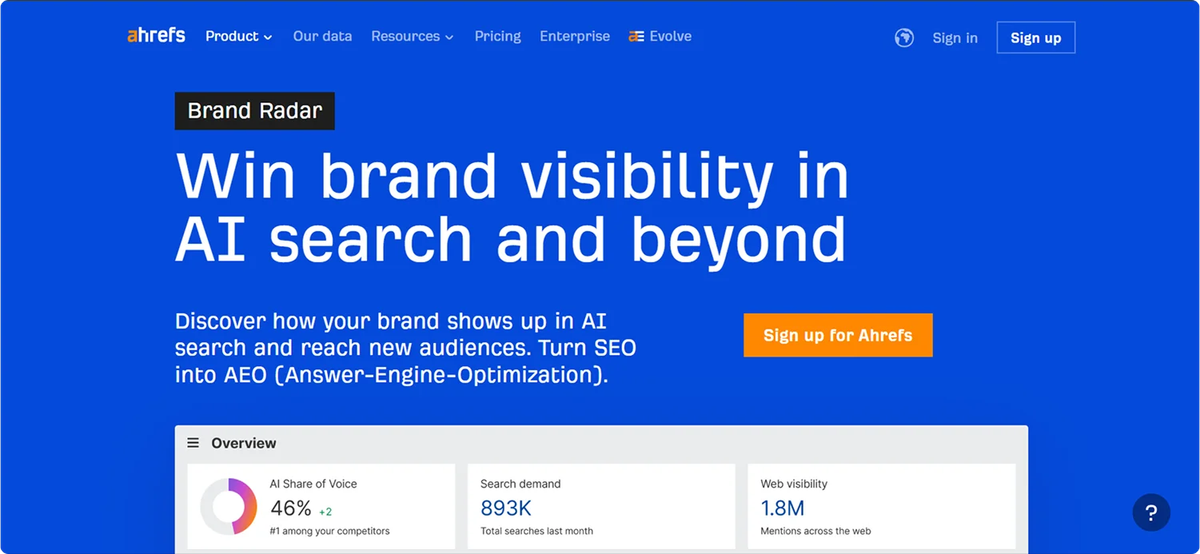
Ahrefs offers Brand Radar as an add-on for tracking brand mentions across AI platforms, including Copilot.
Key features for Copilot tracking:
- Brand mention monitoring across Copilot and other AI platforms
- Integration with Ahrefs' comprehensive backlink and SEO toolkit
- Historical data tracking for trend analysis
- Search demand tracker showing total search volume for brand-related terms
Pricing: $199/month per individual AI platform index, or $699/month for all platforms. Available as a standalone tool to all Ahrefs users.
Limitations: GEO features are an add-on to their legacy SEO platform, so AI-specific capabilities are limited compared to purpose-built tools.
12. Scrunch AI
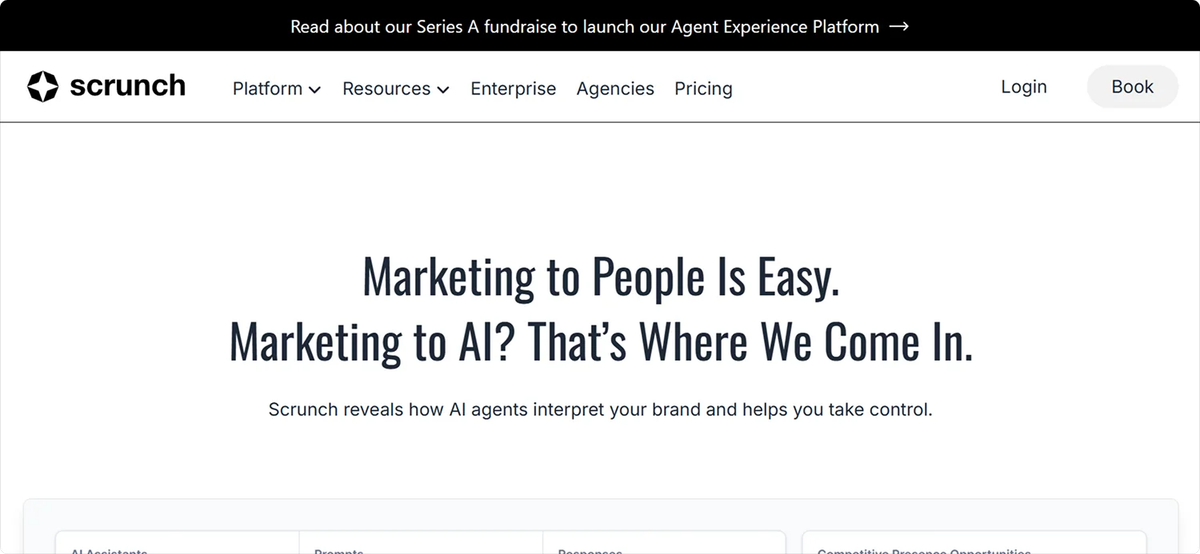
Scrunch AI focuses on detecting and correcting false narratives in AI responses, including Copilot.
Key features for Copilot tracking:
- Misinformation detection for identifying false or outdated brand information in Copilot responses
- Agent Experience Platform (AXP) for creating AI-friendly versions of your website
- Narrative control tools for improving brand representation
- Knowledge Hub for managing content that AI engines cite
Pricing (updated February 2026): Scrunch has simplified to two tiers. Core starts at $250/month (125 prompts, 4 LLMs tracked). Enterprise pricing is custom and includes 9 LLMs. The previous three-tier model (Starter/Growth/Pro at $300/$500/$1,000) has been replaced.
Limitations: Higher pricing for basic features. The AXP feature (separate AI-friendly domain) has not consistently shown visibility gains in production use, since new domains lack authority.
How to Compare Copilot Rank Tracking Tools
When evaluating these tools, consider these factors based on your team's needs:
For marketing teams and agencies managing multiple brands: Look for tools with unlimited brand support, multi-platform coverage, and workflow automation. Superlines and Profound are designed for this use case.
For SEO teams adding AI tracking to their existing stack: Tools like Semrush AI Visibility, SE Ranking Visible, and Ahrefs Brand Radar integrate AI visibility data with traditional SEO metrics you already track.
For teams on a budget: Otterly AI's Lite plan ($29/month) and Peec AI's Starter plan (€89/month) offer entry points for Copilot tracking without a large commitment.
For enterprise teams concerned about brand accuracy: Scrunch AI's misinformation detection and narrative control features address a specific enterprise need around brand safety in AI responses.
What Metrics Should You Track for Copilot Visibility?
The core metrics for Copilot rank tracking mirror those for other AI platforms, but with Copilot-specific nuances:
- Brand visibility rate: The percentage of Copilot responses that mention your brand for tracked queries. This is your headline metric.
- Citation rate: The percentage of Copilot responses that link to your website. Citations and mentions are different: Princeton's GEO research found that content with citations, statistics, and quotations achieves 30-40% higher visibility in AI responses.
- Share of voice: Your brand's mention frequency relative to competitors in Copilot responses for the same queries.
- Sentiment score: Whether Copilot describes your brand positively, neutrally, or negatively. This varies significantly by platform.
- Competitive gap: The difference between your visibility and the top competitor's visibility for each tracked query.
For a deeper dive into tracking methodology, see our guide on how to track brand mentions in AI search results.
How Does Copilot Visibility Compare to Other AI Platforms?
Each AI platform has distinct citation patterns. Based on cross-platform tracking data, here are the key differences:
- Copilot relies heavily on Bing's index, so brands with strong Bing SEO tend to perform better in Copilot than in ChatGPT or Perplexity.
- Copilot's citation rate tends to be lower than Perplexity's but higher than Claude's. Perplexity is citation-heavy by design (it always shows sources), while Claude rarely cites external URLs.
- Enterprise and B2B queries tend to perform better in Copilot than in consumer-focused platforms, reflecting Microsoft's user base.
- Copilot updates its grounding data more frequently than ChatGPT's training data, meaning fresh content has a faster path to visibility in Copilot.
The takeaway: tracking Copilot alongside other platforms reveals gaps and opportunities you would miss with single-platform monitoring. A brand might be invisible on ChatGPT but well-cited on Copilot, or vice versa. For a broader comparison of AI visibility tools, see our AI search visibility tools comparison.
How to Improve Your Copilot Rankings
Based on the data from SE Ranking's study and practical optimization experience, here are the most effective steps:
- Get indexed on Bing. This sounds obvious, but many brands have never submitted their sitemap to Bing Webmaster Tools. Copilot cannot cite what Bing cannot find.
- Use IndexNow for real-time updates. When you publish or update content, IndexNow notifies Bing immediately. This is especially important for Copilot since it uses fresh search results for grounding.
- Structure content for extraction. Use clear headings, bullet points, comparison tables, and FAQ sections. AI platforms prefer content they can easily parse and reformat into conversational answers.
- Build topical authority. SE Ranking's data shows domain traffic is the strongest citation predictor. Publishing comprehensive, interlinked content on your core topics builds the authority signals that drive Copilot citations.
- Add structured data. JSON-LD schema markup helps Copilot understand your content's entities, relationships, and context. Focus on Organization, Product, FAQ, and HowTo schemas.
- Monitor and iterate. Use one of the tools listed above to track which queries you are winning and losing in Copilot, then adjust your content strategy based on the data.
For a complete optimization framework, see our GEO best practices checklist for 2026.
Conclusion
Copilot rank tracking is no longer optional for brands that take AI search visibility seriously. With Microsoft's AI assistant embedded across Windows, Edge, and Microsoft 365, Copilot reaches users that standalone chatbots like ChatGPT do not. The 12 tools reviewed in this guide each offer Copilot tracking with different strengths: some excel at multi-platform coverage, others at competitive benchmarking, and others at actionable optimization workflows.
The most important step is to start tracking now. A 2026 eMarketer survey found that 54% of US marketers plan to implement GEO within 3-6 months, which means the window for early-mover advantage is closing. Brands that establish Copilot visibility today will be harder to displace once the space gets crowded.
Superlines tracks brand visibility across Copilot and 9 other AI platforms, combining citation gap analysis, competitive benchmarking, and AI traffic analytics in a single GEO workflow.
Superlines vs Semrush for Copilot Tracking: Head-to-Head
Semrush dominates visibility for Copilot-related queries at 43.43% share of voice, largely because it is a well-known brand in the SEO space. But when it comes to actual Copilot tracking depth, the two platforms differ significantly. Here is how Superlines and Semrush AI Toolkit compare specifically for Microsoft Copilot rank tracking.
Copilot vs ChatGPT Visibility: How Citation Patterns Differ
One of the most important findings from Superlines cross-platform data is that Copilot citation behavior is structurally different from ChatGPT. Brands that assume their ChatGPT visibility translates to Copilot are often surprised by the gap.
The takeaway: tracking Copilot in isolation or assuming ChatGPT data applies to Copilot will leave blind spots. The best Copilot rank tracker software gives you per-platform breakdowns so you can optimize for each engine's specific citation patterns.
IndexNow + Bing Webmaster Tools Setup Checklist for Copilot Visibility
Since Copilot uses Bing's search index for grounding, your Bing technical setup directly impacts your Copilot visibility. Use this checklist to make sure you are not leaving Copilot citations on the table.