


How should a marketing agency package and price GEO services?
A marketing agency should package GEO (Generative Engine Optimization) services as a tiered retainer model, typically ranging from $2,500 to $12,000 per month. This model moves beyond hourly billing to focus on ongoing deliverables like Brand Visibility protection, Share of Voice reporting, and citation optimization across platforms like ChatGPT and Perplexity.
Clients are increasingly asking, “Why is ChatGPT recommending my competitor?” Marketing agencies that cannot answer this question risk losing their most innovative accounts.
This guide breaks down the pricing models, sales scripts, and deliverables agencies are using to capture this market today.
Why should agencies offer GEO services now?
Agencies should offer GEO now because traditional search traffic is migrating to AI platforms, and clients are willing to pay a premium for "visibility protection" that standard SEO cannot provide.
The shift is measurable. Gartner predicts that by 2026, search engine volume will drop by 25% due to AI chatbots. This decline represents a direct threat to traditional SEO retainers. If your agency does not offer a solution to capture visibility on these new platforms, your clients will eventually find a partner who does.
The strongest sales argument for GEO is “The Invisible Competitor.” Unlike Google, where a user sees 10 blue links, AI answers often provide only 1–3 citations. If your client is not in that top tier, they are effectively invisible to the user.
What are the best pricing models for GEO?
The three best pricing models for GEO are the Tripwire Audit (one-off), the Monthly Retainer (recurring), and the Hybrid Add-on (uplift on SEO).
Agencies are moving away from hourly billing for AI services because the work is value-based, not time-based. A single strategic adjustment to a client’s schema markup can permanently alter how an AI model perceives their brand.
How to sell GEO to skeptical clients (The Pitch Deck)
To sell GEO effectively, agencies must shift the conversation from "traffic volume" to "brand survival." The winning pitch relies on demonstrating that AI models are already forming opinions about their brand, often recommending competitors because the client is historically "invisible" to the training data.
Many clients will say, "Let's wait and see." This is a dangerous strategy. Once an AI model "learns" a brand preference (e.g., associating "best CRM" with "HubSpot"), it is much harder to reverse than a temporary Google ranking drop.
The "Fear of Missing Out" Audit
The fastest way to close a GEO deal is not with a slide deck, but with a live demo. Use a tool like Superlines to run a "Share of Voice" audit during the pitch:
- Ask ChatGPT/Perplexity/Claude: "Who are the top providers for [Client's Service]?"
- Show the result: "Client X, look at this. The AI recommended Competitor A and Competitor B. You were not mentioned at all."
- The Closer: "Every day we wait, your competitor is being reinforced as the market leader in the training data."
Handling Common Objections
Prepare your account managers with these specific counters to common client pushback.
What deliverables should be included in a GEO retainer?
A standard GEO retainer should include monthly Share of Voice reporting, technical schema maintenance, "Answer Engine" content creation, and defensive sentiment monitoring.
Clients need to know what they are paying for. Successful agencies bundle these four core deliverables:
- Visibility Tracking: Automated dashboards showing citation rates across all major AI engines.
- Entity Management: Updating Knowledge Graphs and schema to ensure AI models "understand" the brand correctly.
- New Content Creation and Content Optimization: Addressing any content gaps that might have appeared with new content, updating existing contents old statistics and articles to trigger "freshness signals," which are heavily weighted by AI algorithms and making sure the existing content is better than the current existing articles about the same topic.
- Sentiment Defense: Alerting clients immediately if an AI model starts generating negative answers about their brand.
Research shows that 90% of agency reporting time is wasted on data collection. By using automated tools to handle the tracking (Deliverable #1), your team can focus their billable hours on the actual optimization work (Deliverables #2, #3, and #4) that the solutions can help with as well.
How can agencies scale GEO delivery profitably?
Agencies scale GEO delivery by automating the data collection process, as manual checking of prompts across multiple AI engines is too slow and expensive to be profitable.
Tracking a single client across 5 different AI engines (ChatGPT, Claude, Gemini, Perplexity, SearchGPT) creates a massive workload.
- The Manual Trap: Checking 50 keywords x 5 engines = 250 manual searches/week. This burns billable hours and kills margins.
- The Automated Fix: Tools like Superlines cap this cost. By automating the "Share of Voice" data collection, you turn a variable labor cost into a fixed software cost, keeping your retainer margins healthy (60%+).
Agencies that adopt automation early can offer this premium service profitably from Day 1, without needing to hire a team of data scientists.
What questions will clients ask during the sales pitch?
Clients will ask about the difference between SEO and GEO, how you measure success, and how quickly they will see results.
Early adopters of GEO services are seeing retainer retention rates increase by 15%, as clients view the service as "insurance" for their brand's future.
To summarize AI search visibility is becoming non-negotiable for agencies
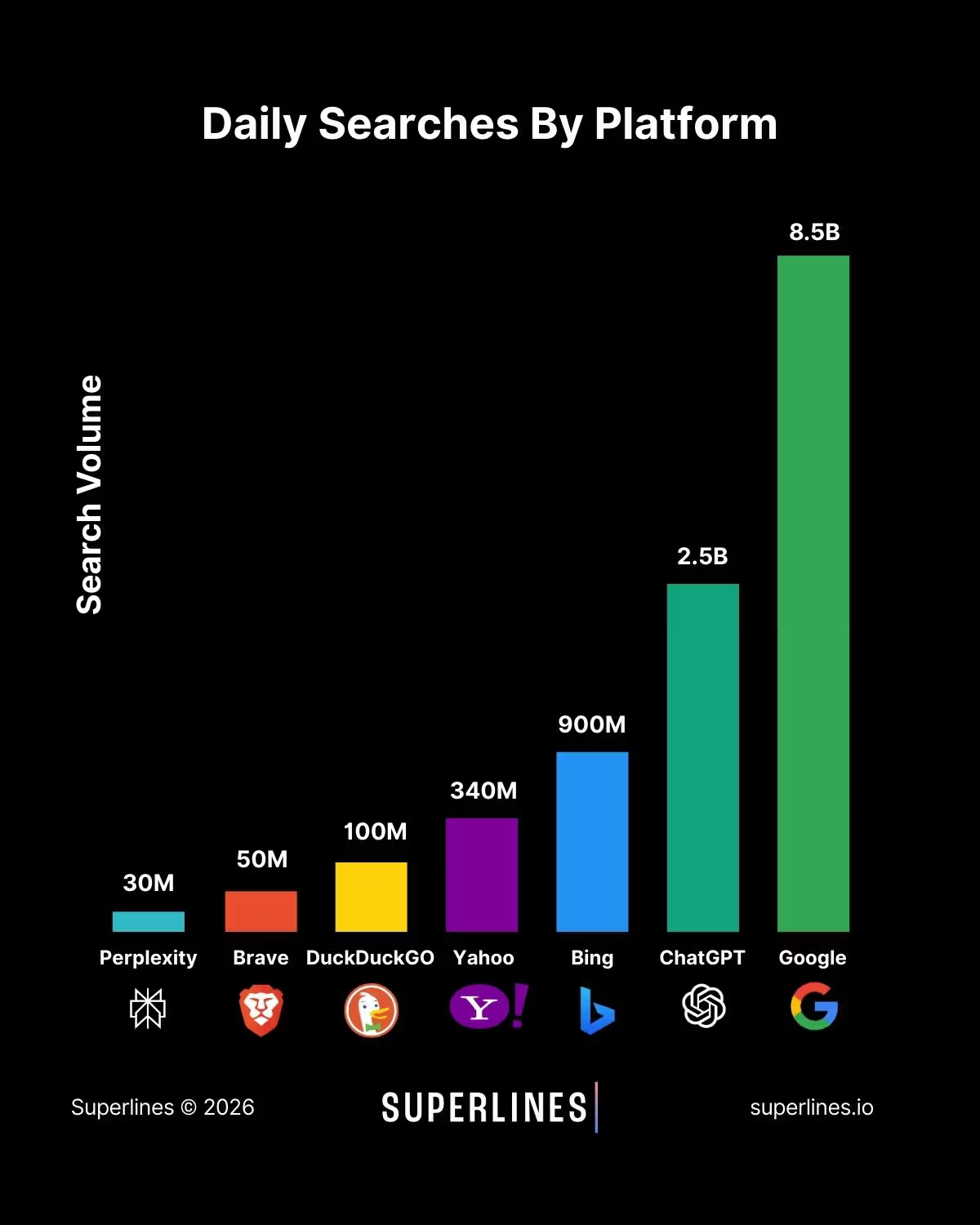
AI search is no longer a trend. It's the new baseline. ChatGPT processes over 2.5+ billion queries daily, and that traffic is growing faster than any other channel. Agencies that don't offer GEO services risk losing clients to competitors who do. Agencies that do offer GEO but lack proper tools waste time, miss insights, and struggle to prove ROI.
The right GEO analytics platform does three things: it consolidates visibility data across all clients, automates reporting so you spend less time on spreadsheets, and surfaces actionable insights that drive measurable results. Superlines helps agencies manage multiple clients in one interface with flexible reporting designed specifically for QBRs and stakeholder presentations.
Read our comparison article about What Are the Best GEO (Generative Engine Optimization) Platforms for Agencies.
The window to establish GEO expertise is open now. Early-adopter agencies can strengthen client relationships and build long-term loyalty, while others risk falling behind.
However, the economics only work if you solve the operational burden. By leveraging automation tools like Superlines to handle complex data tracking, agencies can build a scalable, high-margin service that helps protect and grow their clients’ presence in AI search.
It is important to choose solutions that support agentic workflows on top of the data. Automating or even partially automating key tasks can significantly improve team efficiency, allowing agencies to grow their client base without increasing headcount.
Data shows that traffic from AI-Search channels can convert at 4.4x higher rates than traditional organic search according to Ahrefs, making GEO an increasingly valuable service for agencies to offer.
Get started with Superlines today!