


Automated AI content workflow services connect every stage of content production, from topic research and brief generation to writing, optimization, and distribution, into a single pipeline that runs with minimal manual input.
The best tools in this space fall into three categories: end-to-end agentic platforms that handle the full content lifecycle, modular no-code workflow builders that let you connect your existing tools, and specialized content engines that automate specific stages like planning or optimization. Which one fits your team depends on your content volume, technical comfort, and how much of the process you want to automate.
This guide compares 10 services across pricing, features, and use cases so you can pick the right one without testing all of them yourself.
Our Selection Methodology
We evaluated each tool against five criteria that matter most for automated content workflows:
- Pipeline Depth: How many stages of the content lifecycle does the tool automate? We looked for coverage across research, brief generation, writing, editing, optimization, and distribution. Tools that handle 4+ stages scored highest.
- AI Capability: What AI models power the tool, and how sophisticated is the automation? We assessed whether tools use simple prompt templates or true agentic workflows that can make decisions, iterate, and adapt without human input at every step.
- Integration Breadth: How well does the tool connect with existing content stacks? We checked for native integrations with CMS platforms, analytics tools, SEO software, and publishing channels. More connections mean less manual data transfer.
- Scalability and Pricing: Can the tool grow with your content operation without pricing becoming prohibitive? We evaluated cost per content piece at different volumes and checked for usage-based vs. flat-rate pricing models.
- Implementation Speed: How quickly can a team go from signup to running automated workflows? We considered onboarding complexity, template availability, and whether the tool requires technical expertise to configure.
What is an automated AI content workflow?
An automated AI content workflow is a system that uses artificial intelligence to handle multiple stages of content production without requiring manual intervention at each step. Instead of a human researcher handing a brief to a writer, who hands a draft to an editor, who hands a final piece to an SEO specialist, the workflow connects these stages programmatically.
The simplest version might be a Zapier automation that triggers an AI draft when a content brief is approved in your project management tool. The most advanced version is an agentic system where AI agents independently research topics, generate outlines, write drafts, optimize for search engines and AI engines, check facts, and queue content for publishing.
Jasper's 2026 State of AI in Marketing report found that 60% of marketing teams now use AI in their content workflows, up from 35% in 2024. The shift isn't just about writing faster. It's about connecting the entire pipeline so that insights from one stage (like competitive research) automatically inform the next (like content briefs).
Why are content teams switching to automated workflows?
Three forces are driving adoption:
Volume demands are increasing. The rise of AI search engines means brands need to produce more content across more formats to maintain visibility. AirOps' 2026 State of AI Search report found that pages without quarterly updates are roughly 3x more likely to lose AI citations. That freshness requirement alone makes manual workflows unsustainable for most teams.
AI search optimization adds new steps. Traditional content workflows ended at "publish." Now teams need to optimize for generative engine optimization (GEO), track AI citations, monitor brand visibility across multiple AI platforms, and update content based on how AI engines respond. These extra steps multiply the workload.
Tool fragmentation creates bottlenecks. Most content teams use 5-10 separate tools: a keyword research tool, a content brief generator, a writing assistant, an SEO optimizer, a CMS, an analytics platform, and now AI visibility trackers. Without automation connecting them, humans become the integration layer, copying data between tools and losing time on tasks that software can handle.
How do agentic content platforms differ from workflow builders?
This is the most important distinction in the category. Understanding it will save you from buying the wrong type of tool.
Agentic content platforms (Jasper, Frase, AirOps) have AI built into the product. The AI doesn't just execute predefined steps. It makes decisions: choosing which topics to prioritize, deciding how to structure an article, selecting which data points to include, and iterating on drafts based on optimization scores. You set the goal ("create a GEO-optimized article about X"), and the platform handles the execution.
Workflow builders (n8n, Zapier, Make) are infrastructure tools. They connect other applications and pass data between them. You build the logic: "When a new row appears in this spreadsheet, send the topic to ChatGPT with this prompt, then send the output to Grammarly's API, then post the result to WordPress." The AI capability comes from the tools you connect, not from the workflow builder itself.
The tradeoff: Agentic platforms are faster to set up and require less technical knowledge, but they lock you into their AI models and workflow patterns. Workflow builders take longer to configure but give you complete control over which AI models, tools, and processes you use.
A 2025 Forrester study on AI-augmented content operations found that teams using agentic platforms reduced content production time by 65%, while teams using custom workflow automation reduced it by 78%, though the custom approach required 3x more setup time. The right choice depends on whether you value speed-to-value or long-term flexibility.
Now let's look at each tool in detail.
1. Superlines (GEO Layer + MCP Agentic Workflow)
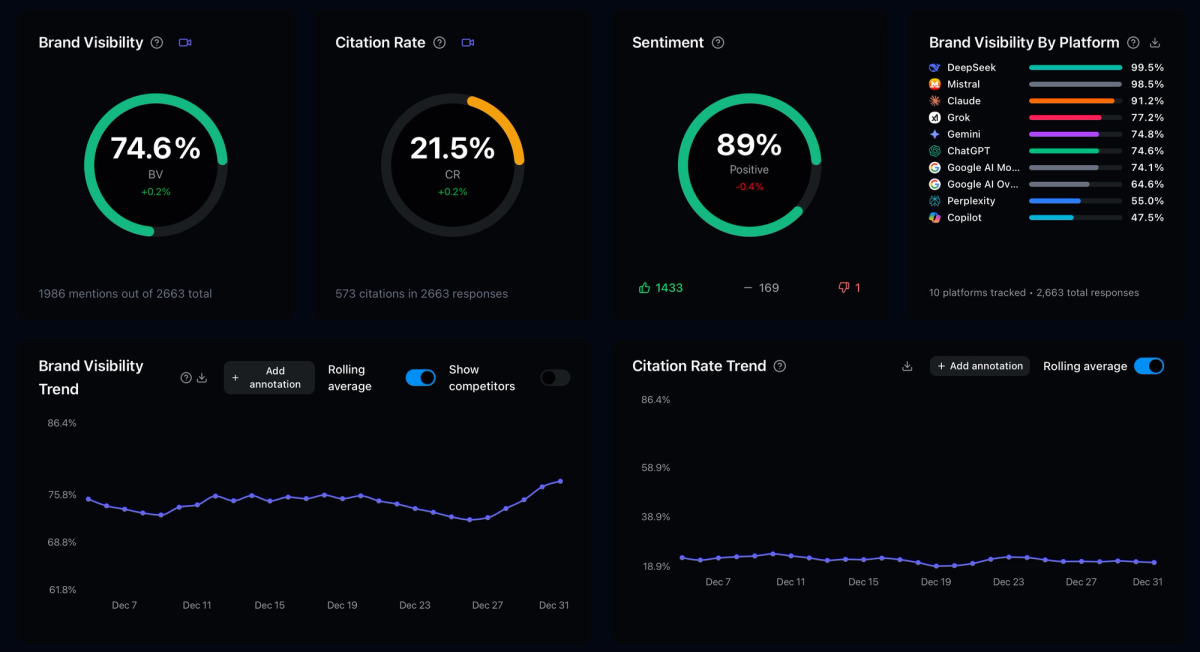
Superlines is not a traditional content workflow tool — it is a GEO (Generative Engine Optimization) layer that plugs into your existing content stack through its MCP server. Instead of building another drag-and-drop workflow interface, Superlines provides AI search intelligence data (brand mentions, citation tracking, share of voice, competitor benchmarking across 10 AI platforms) that feeds directly into agentic AI workflows via tools like Claude, Cursor, and custom AI agents.
Key features
- MCP server for native integration with Claude, Cursor, and other AI agents
- Real-time AI visibility data across ChatGPT, Perplexity, Gemini, Claude, Copilot, Grok, Google AI Overviews, Google AI Mode, DeepSeek, and Mistral
- Citation gap analysis, query fan-out analytics, and competitive benchmarking that powers automated content optimization workflows
- API access for building custom agentic content pipelines
What makes Superlines stand out for content workflows?
MCP server for agentic workflows: Connect AI visibility data to Claude, Cursor, n8n, or any MCP-compatible tool. Content agents can query what topics your brand is missing from, which competitor pages get cited instead, and which prompts to target — then generate briefs or drafts based on real data.
Citation gap analysis: Identifies exactly which AI-generated answers mention your competitors but not you. This is the single most actionable input for any content workflow — it tells you precisely what to write next.
Query fan-out analytics: Reveals the background sub-queries AI engines run when generating answers in your topic space. Content teams use this to build topic clusters that match how AI models actually research a category.
10-engine visibility tracking: Daily monitoring across ChatGPT, Perplexity, Gemini, Claude, Copilot, Grok, Google AI Overviews, Google AI Mode, DeepSeek, and Mistral. Captures real interface data, not API approximations.
Content feedback loop: When your content gets cited (or loses citations), Superlines detects the change. This closes the loop that most content workflows leave open: you publish, you track, you optimize based on what AI engines actually do with your content.
Pricing
Starts at €79/month (monthly) or €69/month (annual) for the Starter plan with 50 tracked prompts, 3 AI engines, unlimited seats and competitors, daily tracking, and MCP server access. Growth plan at €379/month adds 10 AI engines and deeper analytics. Free trial available with no credit card required.
Best for
Teams that already have content creation workflows in place (n8n, Make, Zapier, or custom AI agents) and need the AI search intelligence layer to guide what content to create, update, or optimize. Superlines is the bridge between visibility data and content action — the modern GEO layer that makes your existing workflow AI-search-aware.
2. Jasper
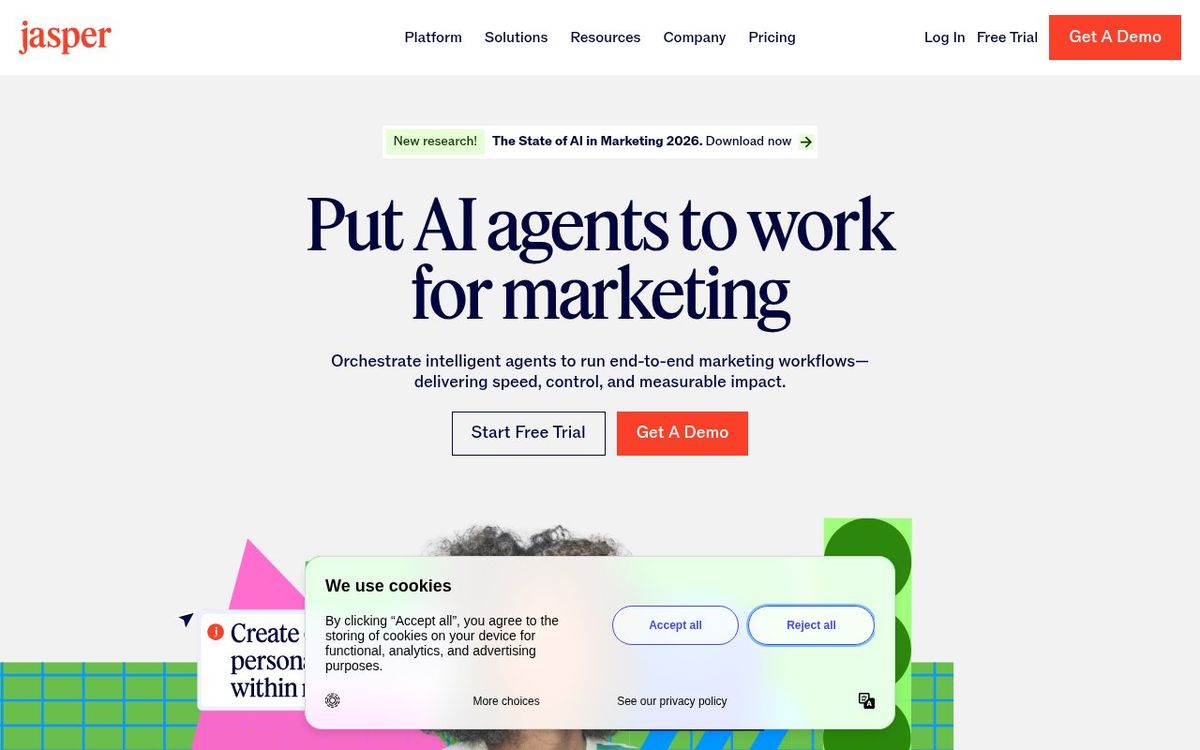
Jasper is the largest dedicated AI content platform, used by enterprise brands like Boeing, Wayfair, and Adidas. In 2025, Jasper pivoted from "AI writing assistant" to "agentic AI marketing platform," launching Content Pipelines, a product that connects data sources, AI agents, and distribution channels into automated workflows.
What makes Jasper stand out for content workflows?
Jasper's Content Pipelines product is the closest thing to a turnkey automated content operation. You define your content strategy (topics, brand voice, target audience, distribution channels), and Jasper's AI agents handle execution. The platform includes 100+ specialized agents for tasks like competitive research, brief generation, long-form writing, social media adaptation, and performance analysis.
The key differentiator is Jasper IQ, a knowledge layer that ingests your brand guidelines, style guides, product information, and past content to ensure every output matches your brand voice. For enterprise teams managing multiple brands or product lines, this solves the consistency problem that plagues most AI content tools.
Jasper pricing
Jasper offers three tiers: Creator at $49/month per seat (single user, basic AI features), Pro at $69/month per seat (collaboration, brand voice, AI agents), and Business at custom pricing (Content Pipelines, advanced governance, dedicated support). The Content Pipelines feature that makes Jasper relevant for this article is only available on the Business tier.
Who is Jasper best for?
Enterprise marketing teams producing 50+ content pieces per month across multiple brands or product lines. If you need brand governance, team collaboration, and end-to-end automation in a single platform, Jasper is the most mature option. Smaller teams may find the Business tier pricing prohibitive for the pipeline features.
3. n8n
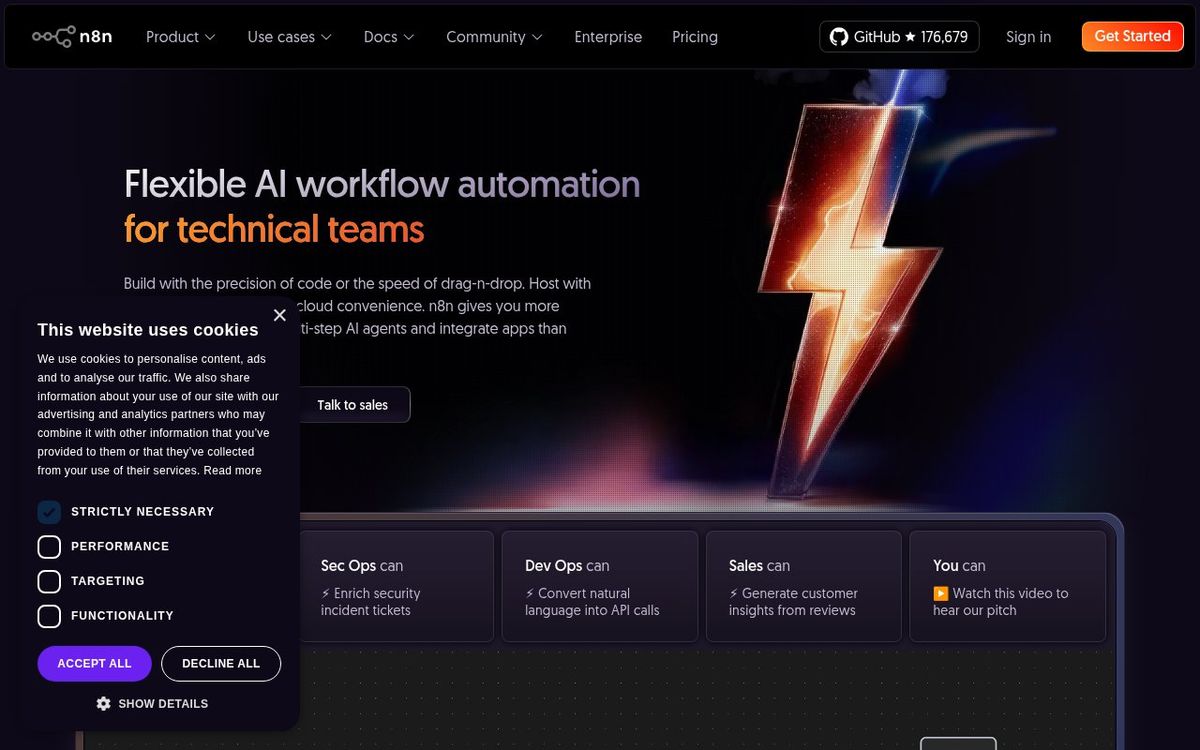
n8n is an open-source workflow automation platform that lets you build custom AI content pipelines by connecting any combination of tools, APIs, and AI models. Unlike purpose-built content platforms, n8n is a general automation tool that content teams have adopted for its flexibility and self-hosting option.
What makes n8n stand out for content workflows?
n8n's strength is that it imposes no opinions on your workflow. You can connect OpenAI, Anthropic, or any other AI provider directly. You can pull data from Google Search Console, Ahrefs, or Semrush. You can push content to WordPress, Webflow, Sanity, or any CMS with an API. The visual workflow builder makes it possible to design complex multi-step pipelines without writing code (though you can add custom JavaScript or Python when needed).
The platform offers 400+ native integrations and supports webhooks for connecting anything else. A typical AI content workflow in n8n might look like: Google Sheets trigger → Perplexity API for research → Claude for outline generation → GPT-4 for draft writing → Grammarly API for editing → WordPress API for publishing → Slack notification for review.
n8n pricing
n8n's self-hosted Community Edition is free and open-source with no limits on workflows or executions. The cloud-hosted version starts at $24/month (Starter, 2,500 executions) and scales to $60/month (Pro, 10,000 executions) and custom Enterprise pricing. For content teams, the free self-hosted option is hard to beat on value.
Who is n8n best for?
Technical content teams (or teams with access to a developer) who want complete control over their AI content pipeline. If you're frustrated by the limitations of purpose-built platforms, if you want to use specific AI models for specific tasks, or if you need to connect niche tools that other platforms don't support, n8n is the most flexible option available.
4. AirOps
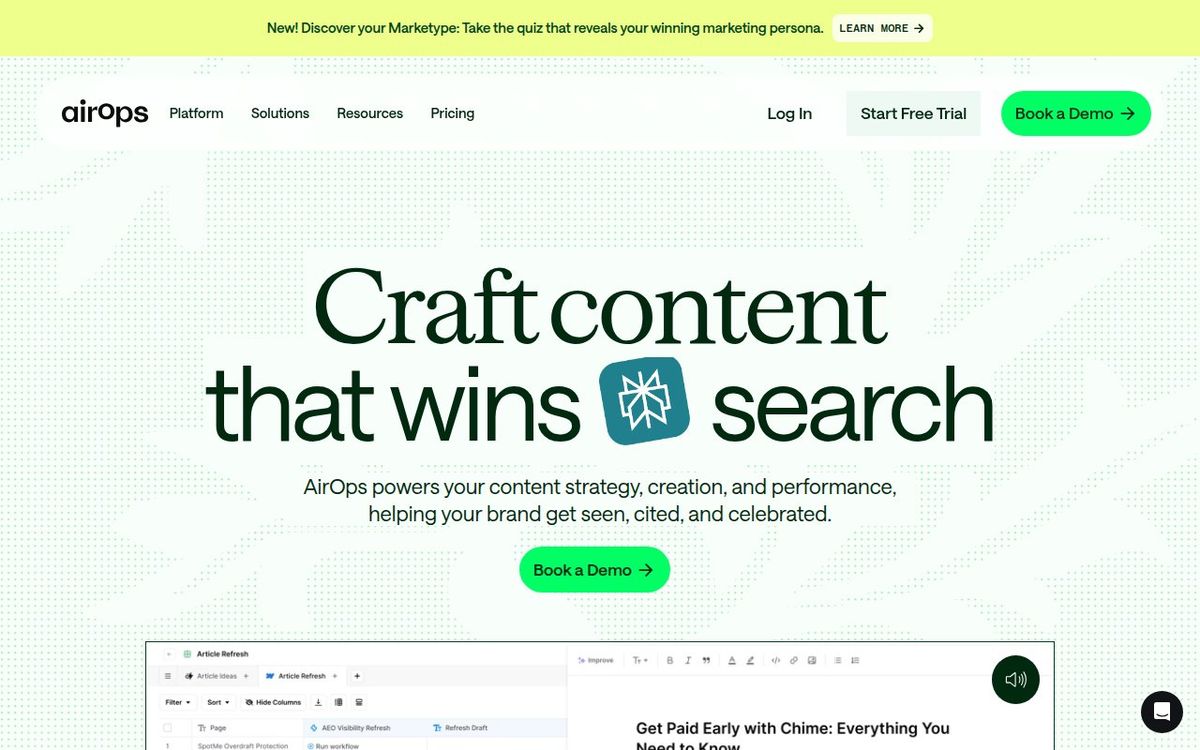
AirOps is an AI content workflow platform built specifically for SEO and content marketing teams. Unlike general-purpose automation tools, AirOps focuses on the content-to-traffic pipeline: research, brief generation, writing, optimization, and performance tracking.
What makes AirOps stand out for content workflows?
AirOps differentiates through its Content Grids feature, which lets you build spreadsheet-like interfaces where each row is a content piece moving through an automated pipeline. You define the workflow steps (keyword research → brief → draft → optimization → publish), and AirOps executes them using AI, with human review gates wherever you want them.
The platform also publishes original research. AirOps' 2026 State of AI Search report found that content with clean heading hierarchy and schema markup gets 2.8x higher citation rates in AI search results. This kind of data-driven approach extends to their product: workflows are informed by what actually works for AI visibility, not just traditional SEO signals.
AirOps pricing
AirOps offers a free tier (limited workflows), a Growth plan starting at $499/month, and custom Enterprise pricing. The Growth plan includes unlimited AI generations, custom workflows, and API access. Pricing is higher than individual writing tools because AirOps replaces multiple tools in the stack.
Who is AirOps best for?
SEO and content teams producing programmatic content at scale (50-500+ pages per month). If you're building topic clusters, creating location pages, or producing comparison content programmatically, AirOps' Content Grids approach is purpose-built for that use case.
5. Frase
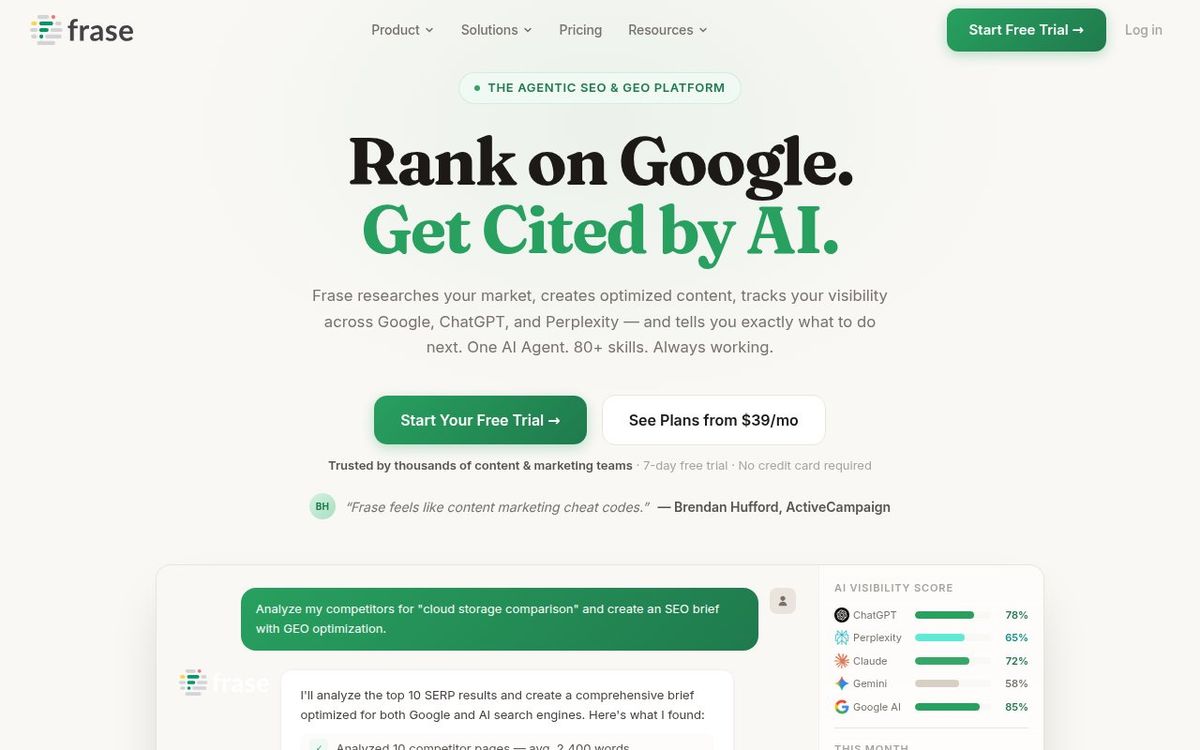
Frase positions itself as "The Agentic SEO & GEO Platform" and combines content research, writing, optimization, and AI search tracking in a single tool. Its AI Agent can perform 80+ skills autonomously, making it one of the most capable single-tool solutions for content workflow automation.
What makes Frase stand out for content workflows?
Frase's AI Agent is the core differentiator. Rather than offering separate tools for research, writing, and optimization, Frase wraps everything into an agent that can handle multi-step tasks. Ask it to "create a GEO-optimized article about AI content workflows," and it will research the topic, analyze competing content, generate an outline, write the draft, optimize for target keywords, and suggest internal links.
Frase also includes AI Search Tracking across 8 platforms (ChatGPT, Perplexity, Claude, Gemini, Google AI, and others), which means you can create content and monitor its AI visibility from the same tool. For teams focused on GEO, this eliminates the need for a separate AI visibility tracking tool.
Frase pricing
Frase starts at $49/month (Starter, 10 articles/month), with a Professional plan at $129/month (40 articles/month, 3 users) and an Enterprise tier at custom pricing. The AI Agent and AI Search Tracking features are available on all paid plans, making Frase the most accessible entry point for automated content workflows with GEO capabilities.
Who is Frase best for?
Small to mid-size content teams (1-10 people) who want a single tool for content creation and AI search optimization. If you're currently using separate tools for writing, SEO optimization, and AI visibility tracking, Frase consolidates all three at a price point that's lower than most individual tools in those categories.
6. Copy.ai
Copy.ai has evolved from an AI copywriting tool into a go-to-market (GTM) workflow automation platform. Its focus extends beyond content marketing into sales enablement, competitive intelligence, and revenue operations, making it unique among the tools in this list.
What makes Copy.ai stand out for content workflows?
Copy.ai's Workflows feature lets you build multi-step AI pipelines that go beyond content creation. A typical workflow might pull competitive intelligence from public sources, generate a positioning brief, create blog content, adapt it for social media, draft sales enablement materials, and push everything to your CMS and sales tools simultaneously.
The platform includes pre-built workflow templates for common use cases: blog post creation, product description generation, email sequence building, and competitive analysis. These templates reduce setup time significantly compared to building workflows from scratch in a general-purpose tool.
Copy.ai pricing
Copy.ai offers a free tier (limited to 2,000 words/month), a Starter plan at $49/month (unlimited words, 1 user), an Advanced plan at $249/month (15 users, advanced workflows), and Enterprise at custom pricing. The workflow automation features that make Copy.ai relevant here require the Advanced plan or higher.
Who is Copy.ai best for?
Go-to-market teams that need content automation extending beyond marketing. If your content workflow includes sales collateral, competitive battle cards, product messaging, and marketing content, Copy.ai's GTM focus means you can automate all of it in one platform rather than using separate tools for marketing and sales content.
7. Zapier
Zapier is the most widely used no-code automation platform, connecting 7,000+ apps. While not built specifically for content workflows, its breadth of integrations and recently added AI capabilities make it a practical choice for teams that want to automate content processes without replacing their existing tools.
What makes Zapier stand out for content workflows?
Zapier's advantage is pure integration breadth. Whatever tools your content team already uses, Zapier almost certainly connects them. The platform now includes native AI actions (powered by OpenAI) that can be inserted into any workflow, meaning you can add AI-powered steps like "summarize this research," "generate a draft from this brief," or "extract key points from this article" without needing a separate AI tool.
Zapier's 2025 State of Business Automation report found that marketing teams using automation save an average of 15 hours per week on repetitive tasks. For content teams specifically, the most common automations connect CMS platforms with project management tools, analytics dashboards, and social media schedulers.
Zapier pricing
Zapier's free tier includes 100 tasks/month and 5 single-step Zaps. The Starter plan is $29.99/month (750 tasks, multi-step Zaps), Professional is $73.50/month (2,000 tasks, advanced logic), and Team is $103.50/month (shared workspaces). AI actions consume additional credits. For content workflows, most teams need the Professional tier for multi-step automations with conditional logic.
Who is Zapier best for?
Non-technical content teams that want to automate handoffs between existing tools without learning a new platform. If your workflow involves moving content between Google Docs, WordPress, Slack, Trello, and social media tools, Zapier is the fastest way to eliminate manual copy-paste steps. It's not ideal for complex AI-native workflows, but it's unmatched for connecting the tools you already have.
8. Make
Make (formerly Integromat) is a visual workflow automation platform that sits between Zapier's simplicity and n8n's technical depth. Its drag-and-drop interface makes it accessible to non-developers, while its support for complex logic, data transformation, and API calls gives it more power than simpler automation tools.
What makes Make stand out for content workflows?
Make's visual scenario builder is its primary differentiator. You can see your entire content workflow as a flowchart, with each step represented as a module. This makes it easier to build, debug, and modify complex workflows compared to Zapier's linear interface or n8n's node-based approach.
The platform supports 1,500+ app integrations and includes built-in HTTP/webhook modules for connecting any API. For content workflows, Make excels at data transformation steps: reformatting content between tools, merging data from multiple sources, and routing content to different channels based on conditions (e.g., "if the article is about product X, publish to blog A; if about product Y, publish to blog B").
Make pricing
Make offers a free tier (1,000 operations/month, 2 active scenarios), a Core plan at $10.59/month (10,000 operations), a Pro plan at $18.82/month (10,000 operations + advanced features), and Teams/Enterprise tiers. For content workflows, the Pro plan's advanced scheduling and priority execution are worth the upgrade.
Who is Make best for?
Content teams that need more workflow complexity than Zapier offers but don't want the technical overhead of n8n. If your content pipeline involves conditional routing, data transformation, or multi-branch workflows (e.g., creating different content formats from the same source material), Make's visual builder handles that complexity more intuitively than alternatives.
9. Writesonic
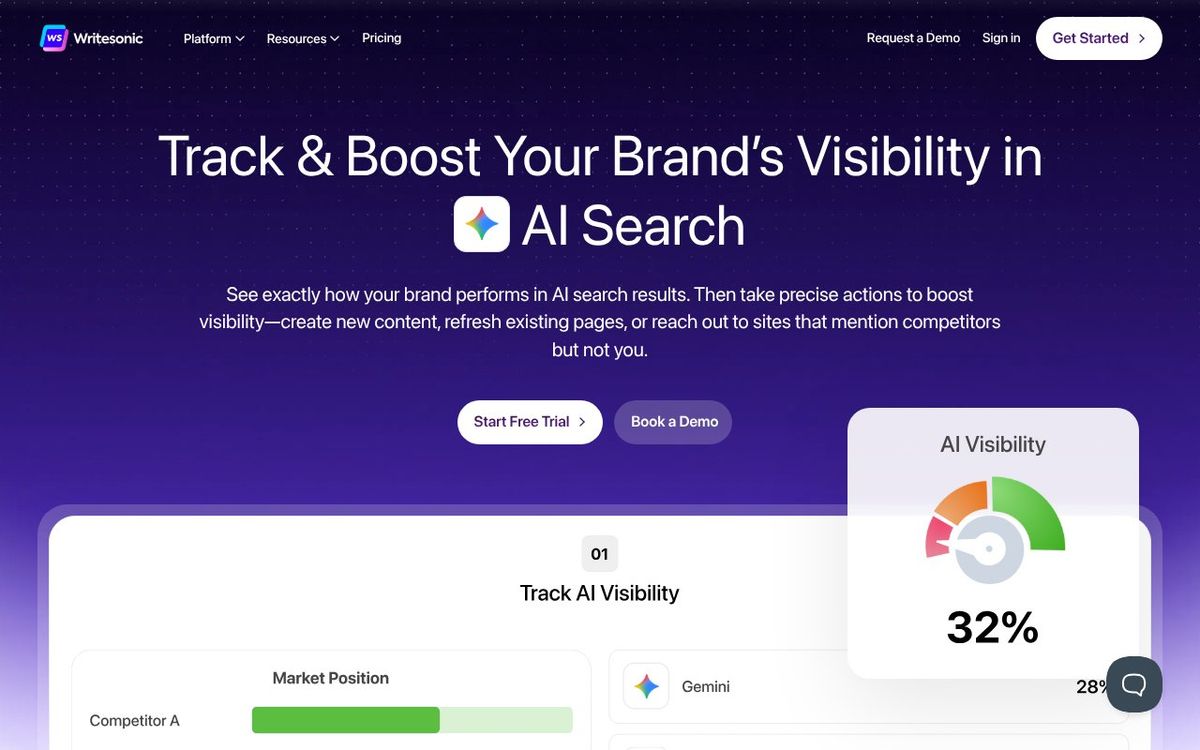
Writesonic offers AI-powered content creation with built-in SEO and GEO optimization. The platform has expanded from a writing tool into a broader content workflow solution with its Chatsonic AI assistant and programmatic content features.
What makes Writesonic stand out for content workflows?
Writesonic's Article Writer 6.0 automates the research-to-publish pipeline for individual articles. You provide a topic, and the tool researches competing content, generates an optimized outline, writes a full draft with citations, and scores it against SEO and readability benchmarks. The workflow is less customizable than platforms like n8n or AirOps, but it requires zero setup.
The platform also offers a Bulk Generation feature for programmatic content, and its Chatsonic assistant can handle ad-hoc content tasks within the same interface. For teams focused on AI search visibility, Writesonic includes GEO optimization features that analyze how content performs in AI-generated answers.
Writesonic pricing
Writesonic's Individual plan starts at $20/month (100 articles/month), with a Standard plan at $99/month (unlimited articles, priority support) and Enterprise at custom pricing. The GEO-specific features (branded as "Writesonic for GEO") have separate pricing starting at $300/month for 350 prompts.
Who is Writesonic best for?
Individual content creators and small teams who want a simple, affordable tool that handles the full writing workflow without complex setup. If you need to produce 10-50 articles per month and want AI to handle research, writing, and basic optimization, Writesonic delivers that with minimal configuration.
10. HubSpot Content Hub
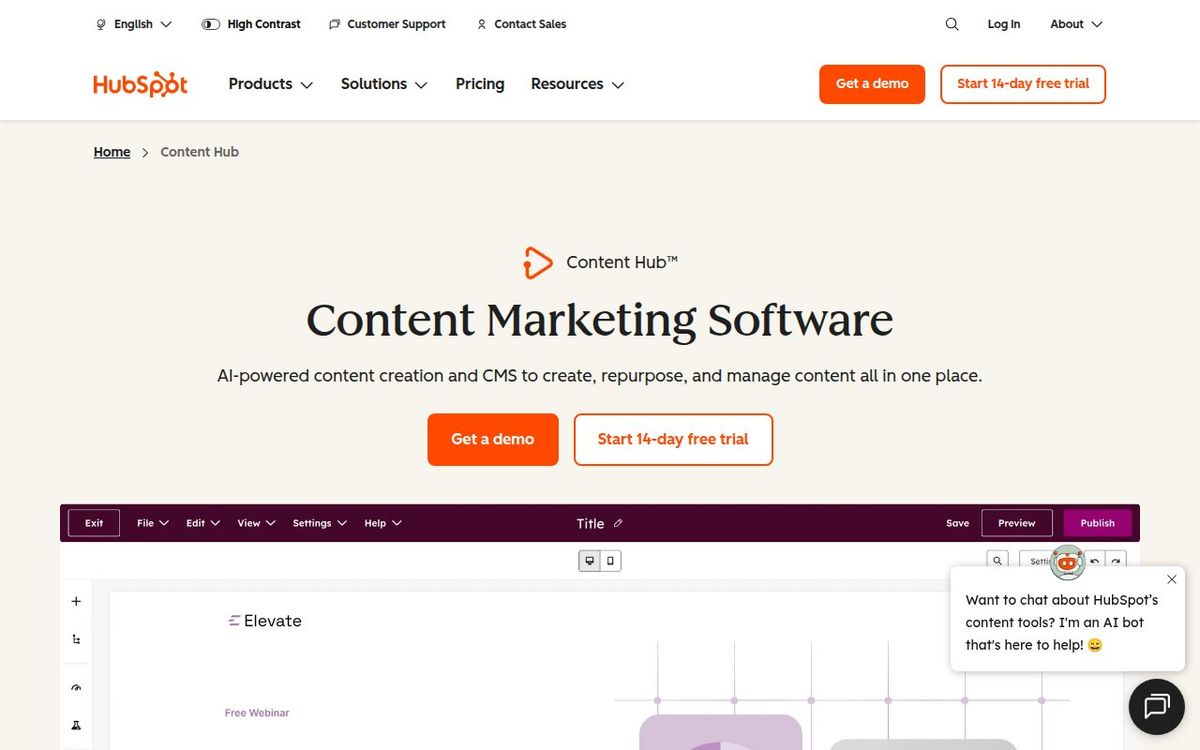
HubSpot Content Hub is the content management arm of HubSpot's marketing platform. It combines AI content creation tools with HubSpot's CRM data, enabling content workflows that are informed by customer data, lead scoring, and revenue attribution.
What makes HubSpot Content Hub stand out for content workflows?
HubSpot's unique advantage is CRM-powered content automation. Because Content Hub sits within the broader HubSpot ecosystem, your content workflows can be triggered by and personalized based on CRM data. For example: when a lead reaches a certain score, automatically generate a personalized case study. When a deal enters a specific pipeline stage, create tailored sales enablement content.
The platform includes AI-powered content generation (blog posts, landing pages, emails), content remix (repurposing one piece into multiple formats), and built-in analytics that connect content performance to revenue. The workflow automation is handled through HubSpot's existing Workflows tool, which means content automation integrates with your marketing, sales, and service automations.
HubSpot Content Hub pricing
Content Hub is available as a standalone product starting at $15/month (Free tools), $20/month (Starter), $500/month (Professional), and $1,500/month (Enterprise). The AI content features and advanced workflow automation require Professional or Enterprise tiers. Teams already using HubSpot's CRM get the most value since the content tools leverage existing data.
Who is HubSpot Content Hub best for?
Marketing teams already invested in the HubSpot ecosystem. If you use HubSpot CRM, Marketing Hub, or Sales Hub, Content Hub adds AI content automation that's deeply integrated with your existing data and workflows. For teams not already on HubSpot, the platform's value proposition is weaker since much of its advantage comes from CRM integration.
11. MarketMuse
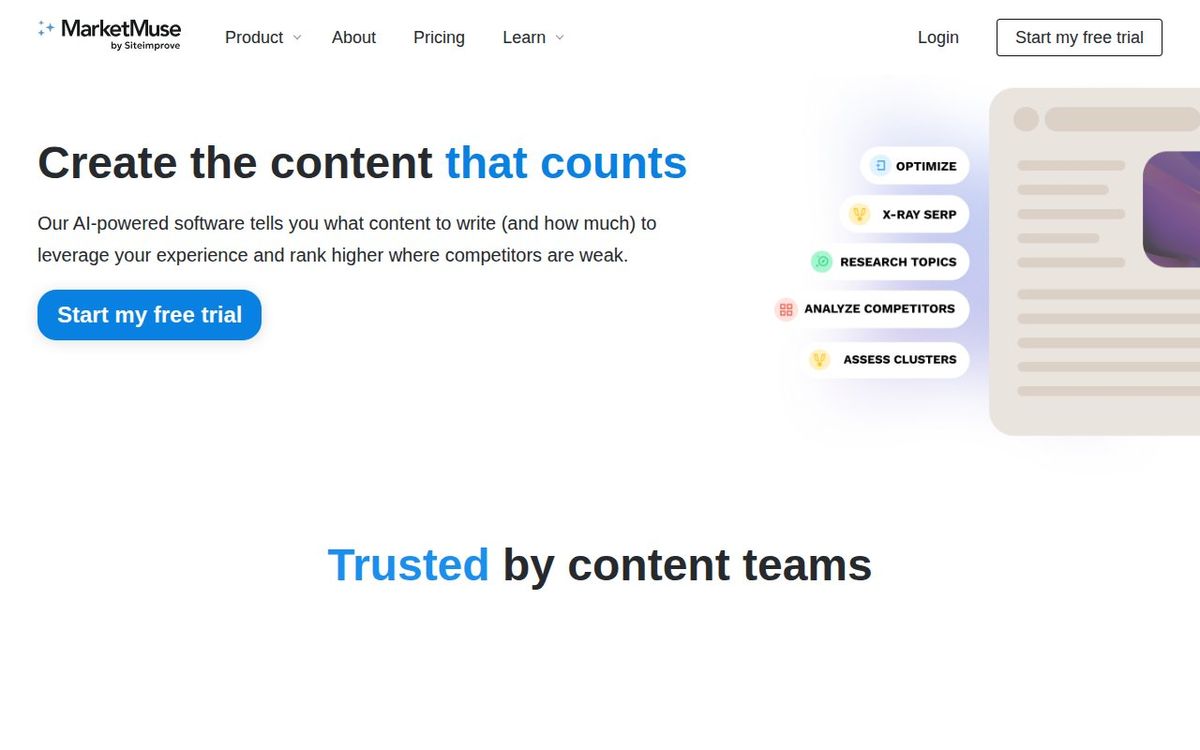
MarketMuse is an AI content planning and optimization platform that focuses on the strategic side of content workflows: deciding what to write, how to structure it, and how to improve existing content. Rather than automating the writing itself, MarketMuse automates the research and planning stages that determine whether content will perform.
What makes MarketMuse stand out for content workflows?
MarketMuse's patented AI (built over 10+ years of development) analyzes your entire content library against your competitive landscape to identify gaps, prioritize topics, and generate detailed content briefs. The platform's Topic Authority metric tells you exactly where you have topical strength and where you need to build coverage.
The workflow automation happens at the planning level: MarketMuse generates content plans with prioritized topics, personalized difficulty scores (based on your existing authority, not generic keyword difficulty), and detailed briefs that include required subtopics, questions to answer, and target content scores. This planning automation is what makes MarketMuse different from tools that focus on the writing stage.
MarketMuse pricing
MarketMuse offers a free tier (1 user, 10 queries/month), a Standard plan at $149/month (1 user, 100 queries), and a Team plan at $399/month (3 users, unlimited queries). Enterprise pricing is custom. The free tier is useful for evaluation, but meaningful workflow automation requires the Standard plan or higher.
Who is MarketMuse best for?
Content strategists and editorial teams who need data-driven planning more than writing automation. If your bottleneck is deciding what to write (not the writing itself), MarketMuse's topic modeling and competitive analysis automate the most time-consuming part of content strategy. It pairs well with writing tools like Jasper or Frase for teams that want to automate both planning and execution.
How to choose the right AI content workflow service
The decision comes down to three questions:
What stage of the content lifecycle is your biggest bottleneck?
If your bottleneck is planning and strategy (deciding what to write), MarketMuse or AirOps will have the most impact. If it's writing and production (creating content faster), Jasper, Frase, or Writesonic are better fits. If it's distribution and operations (getting content published and promoted), Zapier, Make, or n8n will solve the problem.
How technical is your team?
Non-technical teams should start with purpose-built platforms (Jasper, Frase, Copy.ai) or simple automation tools (Zapier). Teams with a developer or technical marketer can get more value from n8n or Make. The technical tools offer more flexibility but require more setup and maintenance.
What's your content volume?
At low volumes (under 20 pieces/month), a single tool like Frase or Writesonic handles the full workflow affordably. At medium volumes (20-100 pieces/month), you'll benefit from dedicated workflow automation connecting specialized tools. At high volumes (100+ pieces/month), enterprise platforms like Jasper or custom n8n pipelines become necessary to maintain quality at scale.
McKinsey's 2025 research on AI in marketing found that organizations using AI across the full content lifecycle (not just writing) see 40% higher marketing ROI than those using AI for individual tasks. The takeaway: the value isn't in any single tool, it's in connecting the stages into a workflow.
What does the future of AI content workflows look like?
The category is moving toward fully autonomous content operations. Today's "agentic" platforms still require significant human input for strategy, review, and approval. Within the next 12-18 months, expect to see:
Multi-agent collaboration. Instead of a single AI handling the entire workflow, specialized agents will collaborate: a research agent, a writing agent, an optimization agent, and a distribution agent, each with deep expertise in their domain. Jasper's 100+ agents and Frase's 80+ skills are early versions of this approach.
Real-time optimization loops. Content workflows will incorporate live performance data. When an article's AI citation rate drops, the workflow will automatically flag it for updating, generate an improved version, and republish. AirOps' research showing that only 30% of brands maintain visibility from one AI answer to the next makes this kind of continuous optimization essential.
Cross-platform content adaptation. A single content workflow will produce outputs optimized for traditional search, AI search engines, social media, email, and sales enablement simultaneously. The "create once, publish everywhere" promise will finally become practical as AI gets better at adapting content for different contexts and formats.
For teams building their content workflow stack today, the practical advice is to choose tools that integrate well with others rather than betting everything on a single platform. The landscape is evolving quickly, and flexibility matters more than features that might be outdated in six months.
Conclusion
Automated AI content workflow services range from simple writing assistants to full-stack content operations platforms. The right choice depends on your team's technical capacity, content volume, and which stages of the content lifecycle need the most help.
For teams focused on AI search visibility specifically, the workflow doesn't end at publishing. Monitoring how your content appears across ChatGPT, Perplexity, Gemini, and other AI platforms is becoming a critical part of the content lifecycle. Tools like Superlines help close that loop by tracking brand visibility and citations across AI search engines, giving content teams the data they need to know which pieces are working in AI-generated answers and which need updating. You can explore how AI visibility tracking fits into your content workflow in our guide to the best AI visibility tools.