


Promptwatch combines AI Search monitoring with source analysis, agent tools and content workflows. This guide compares it with other platforms for different needs: affordable prompt tracking, multi-brand reporting, website diagnostics, integrated content production and existing SEO workflows.
Compare the plans and capabilities that match your team, whether you are choosing your first AI Search platform, adding to an existing stack or considering a replacement.
Disclosure: Superlines publishes this guide and is included in the comparison. The profiles use official product and pricing information; they are not a controlled benchmark of accuracy or results. Prices were checked on 20 October 2026, in the currencies and billing periods shown.
What Promptwatch offers
Promptwatch tracks brand visibility, competitors and cited sources across AI platforms, with country-level tracking and an agent chat for working with the data. Its pricing page describes collecting answers from AI interfaces. Content agents can create and refresh articles using citation data, and its WordPress integration can send content to drafts or live posts after setup. Monitoring, generating an article and publishing it are distinct parts of that workflow.
The monthly brand plans are Essential at $95 for 50 prompts and one project, Professional at $245 for 150 prompts and two projects, and Business at $579 for 350 prompts and five projects. Essential, Professional and Business each let you track four AI models of your choice; Enterprise supports all available models. API and MCP access start on Essential. Essential includes no AEO articles; Professional includes five per month and Business ten. Agent credits and monthly response allowances are separate limits.
The agency route uses a different model. Kick-off is $199/month with 10,000 responses, Growth $399 with 25,000, and Scale $799 with 65,000. All three agency plans include all supported AI models, unlimited projects, pitch projects and prompts, plus API/MCP access. Unlimited prompts do not mean unlimited collected answers.
Promptwatch is a relevant choice for teams that want AI Search monitoring, source analysis and content workflows in one platform. Compare its brand or agency plan with other options based on the models, tracking capacity, client access and reporting tools your team needs.
What an AI visibility tool helps you see
Imagine a buyer asking, “What’s the best CRM software for my business?” Your company could rank well in Google yet be absent from that answer. An AI visibility tool lets you inspect what the assistant said, which competitors appeared and which pages it cited.
A mention means the brand appears in the answer. A citation means the answer visibly references a source, such as a page on your website. An answer might recommend your product while citing an independent review, or cite your article without recommending your product. Those are different findings with different next steps.
Source analysis makes the distinction useful. If a cited comparison contains an old price, you have a specific correction to investigate. If competitors repeatedly appear in answers about a requirement your site barely explains, you have a concrete topic to address. AI visibility adds this view to SEO; it does not make traffic, leads or sales irrelevant. Our GEO guide explains the wider discipline.
Promptwatch alternatives at a glance
The table highlights the main purchasing differences.
Main alternatives to Promptwatch
Superlines: AI Search intelligence across brands and markets
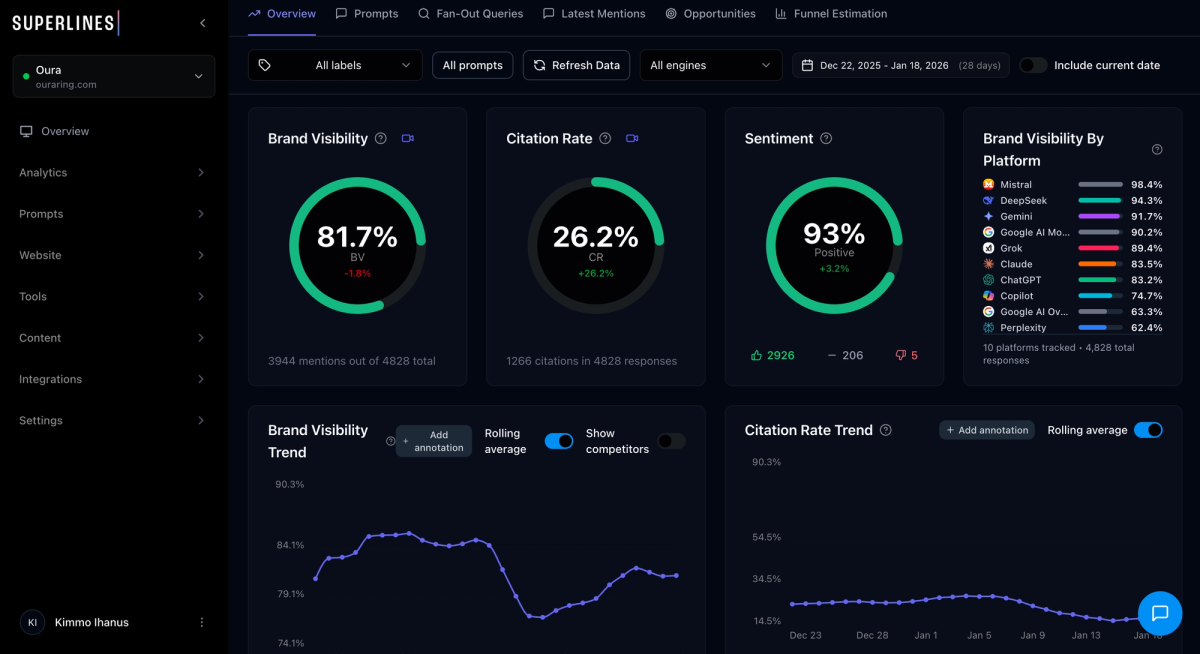
Superlines is a full GEO platform centered on AI Search visibility for enterprise marketers and agencies. It connects Brand Visibility, Citation Rate and Sentiment with competitor and source intelligence, multi-brand/market analysis and Action Center recommendations. Supporting capabilities include website audits, technical/schema recommendations and article generation from prompt data.
The practical difference from Promptwatch is the combination of brand allowances, selected-engine tracking and reporting access. Brand plans cost €79/€199/€379 per month, billed monthly, for Starter/Pro/Growth: 50/150/300 tracked prompts and 1/3/7 brands. Each includes three chosen answer engines, unlimited competitors and MCP. Exports start at Pro; REST API access starts at Growth. History is one, two or six months respectively. Enterprise offers unlimited brands and up to ten engines.
Agency plans at those same monthly list prices allow 5/10/20 client brands. Agency Partners receive a stated 15% discount. For example, an agency serving eight clients could consider Agency Pro’s ten-brand allowance and exports; Promptwatch Kick-off instead offers unlimited projects within a response allocation. The choice turns on required engines, tracking volume and reporting access, rather than the workspace count alone.
Action Center provides recommendations and briefs, while article generation helps prepare drafts. Connected workflows use AI assistants and CMS tools for editing or publishing. Superlines fits teams that want visibility evidence to guide work across a portfolio, with the access tier matched to their reporting needs.
Peec AI: source and brand analysis with client-reporting options
Peec AI combines visibility, position and sentiment tracking with cited-source analysis, brand-perception insights, recommended actions and an agent. It is a relevant alternative when the team's daily work centers on understanding how brands and sources appear, then sharing those findings with stakeholders.
Monthly brand pricing is $95 Starter, $245 Pro and $495 Advanced, with 50/150/350 prompts, three chosen models and 1/2/5 projects. Advanced adds Looker Studio integration; API access is listed with Enterprise. Additional-model options are available, so a three-model plan is not its entire catalog.
Compared with Promptwatch, the decision is about the reporting and analysis setup, not gaining monitoring or an agent for the first time. Agency packages use pooled tracking credits: Essential/Growth/Scale cards display €205/€425/€675 with monthly billing selected, with 10,000/25,000/65,000 credits. Credits allocate prompts, models and frequency across projects; pitch projects and client-reporting options support agency work. For a deeper comparison, see our Peec alternatives guide.
OtterlyAI: a smaller paid monitoring starting point
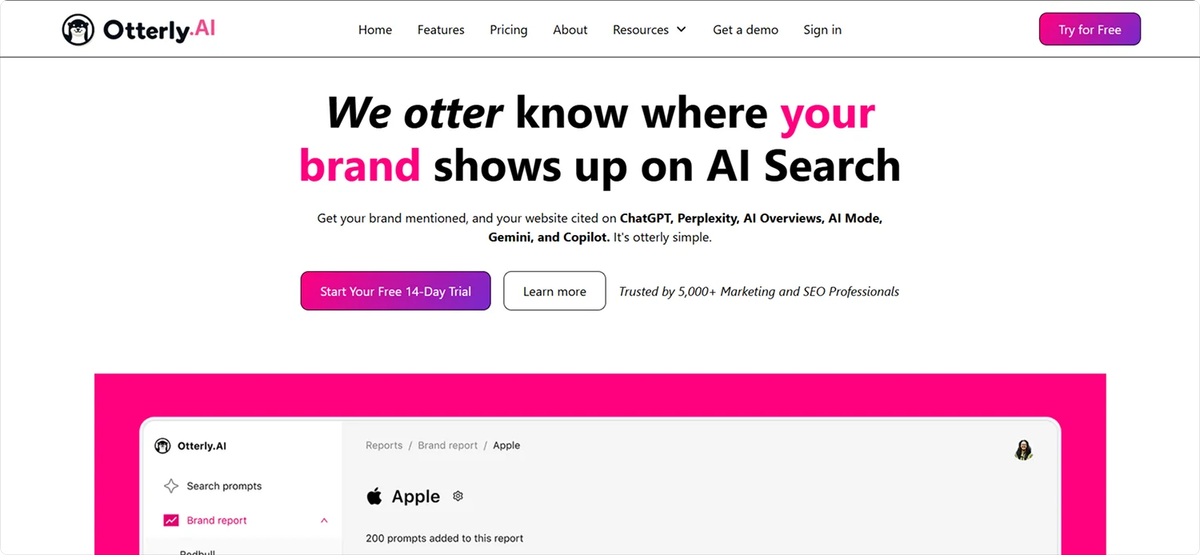
OtterlyAI combines prompt tracking, brand and sentiment analysis, citation-source tracking and GEO recommendations. Its keyword-to-prompt research and audits connect monitoring with pages a marketer can improve.
The Lite plan is $29/month for 15 prompts, compared with Promptwatch Essential's $95 entry price and larger prompt allowance. Standard is $189 for 100 prompts; Premium is $489 for 400. Four engines are included: ChatGPT, Google AI Overviews, Perplexity and Microsoft Copilot. Claude, Gemini and Google AI Mode are add-ons. Standard and Premium include API/MCP access and Agent Analytics; team members are unlimited.
This fits a focused monitoring program that needs relatively few questions. It is less straightforward as a cost reduction if the required engines are add-ons or the team needs Standard's access features. Promptwatch already includes API/MCP at entry, so compare the configured subscription rather than the headline starting prices.
AthenaHQ: response-credit tracking and content optimization
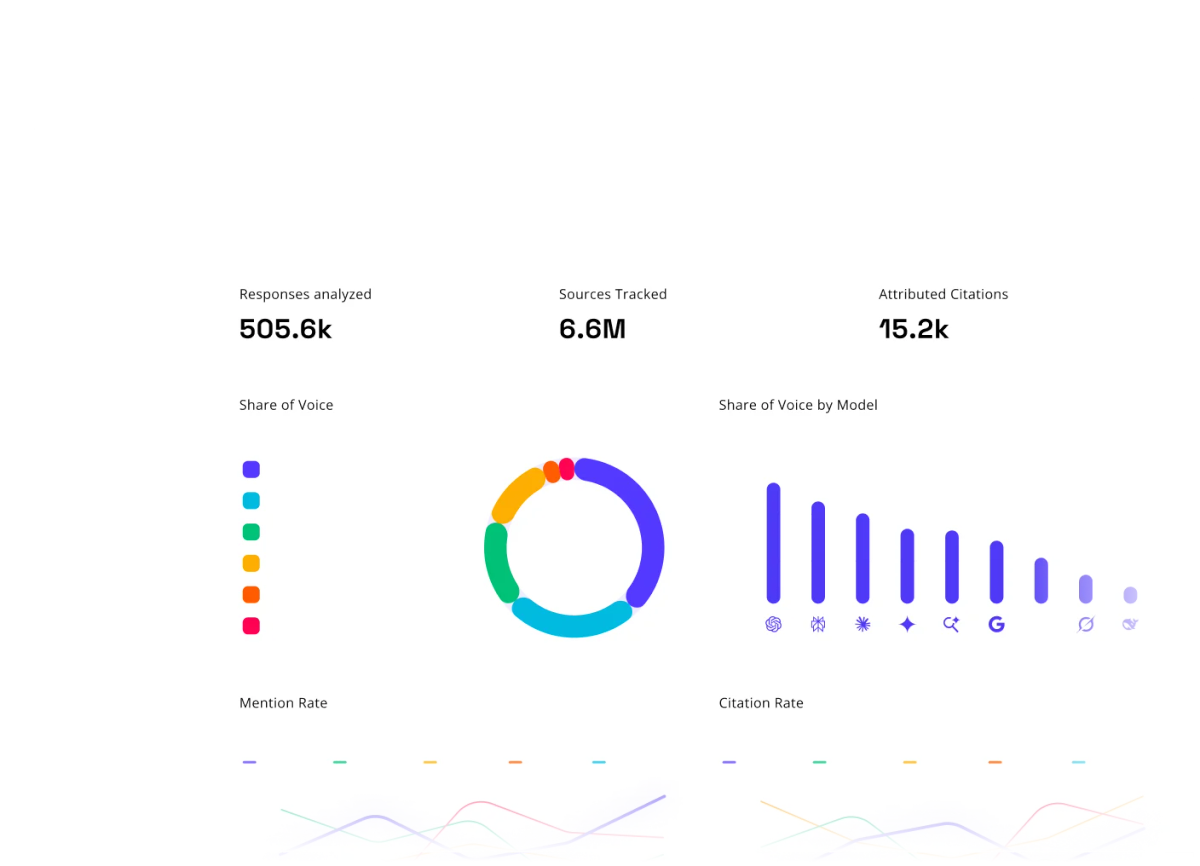
AthenaHQ connects cross-model monitoring, competitor/source analysis and optimization actions. Its content optimization agent and GA4/Search Console integrations suit teams bringing AI visibility work into content and search operations.
Starter costs $295/month with 3,600 credits, where one credit represents one AI response. It lists visibility across eleven models, unlimited topics and prompts, unlimited competitors, CSV exports and single-region/language support. API access and additional credits are paid add-ons. Enterprise adds multi-region/language support, governance and BI reporting options at custom pricing.
Against Promptwatch, Athena offers a response-credit configuration and a content optimization workflow to consider, rather than an automatically larger monitoring allowance. Unlimited saved prompts do not remove the response limit. Promptwatch includes API access on Essential; Athena Starter adds that cost separately. Athena is most relevant when its optimization agent and chosen response allocation fit the team's work; international programs should compare Enterprise with the appropriate Promptwatch configuration.
Profound: tailored brand programs and a separate agency offer
Profound's Answer Engine Insights analyzes brand presence, competitors and sources. Its platform also includes shopping insights, Agent Analytics and AI Marketer workflows. It is relevant when a company wants those capabilities in a tailored program, rather than choosing from Promptwatch's published brand tiers.
The current brand offer is a seven-day trial followed by custom Enterprise pricing, with tailored prompt tracking and up to nine answer engines. Enterprise includes CSV/JSON exports, API access and all-time history.
Agencies have a different route: Agency Growth is $99/month plus add-ons, including ten pitch workspaces per month. A full client workspace is $399/month extra; client-workspace exports are CSV/JSON, while API access is reserved for Agency Enterprise. This is a prospecting-plus-client model, unlike Promptwatch's pooled-response agency plans. See the Profound alternatives guide for the wider shortlist.
Scrunch: website diagnostics and agent-facing delivery
Scrunch combines AI-answer monitoring with citation analysis, persona/topic/geographic benchmarking and AI-bot traffic diagnostics. Its Agent Experience Platform, AXP, serves a lightweight version of site content to AI agents. That site-delivery workflow is the specific reason to consider it alongside Promptwatch's monitoring and content tools.
Starter is $300 month-to-month, or $250/month billed annually, with 350 custom prompts, three users and five page audits. Growth is $500 monthly, or $417/month billed annually, with 700 custom prompts, five users and ten audits. Enterprise includes its Data API and expanded scale.
Scrunch fits teams whose visibility investigation leads into how agents access and interpret their website. AXP's implementation and commercial scope should be established separately from a monitoring subscription. The platform can help diagnose a problem and serve content differently; that is not direct control over what an external AI assistant says about a brand.
Writesonic: article production bundled with tracking
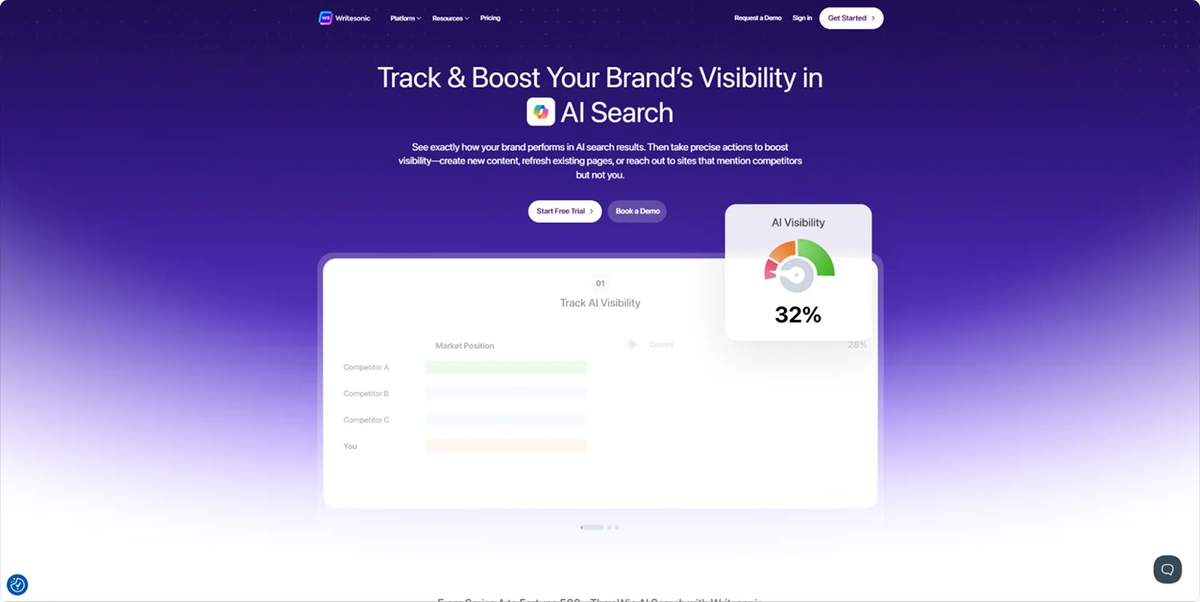
Writesonic's pricing bundles AI visibility tracking, article generation and site audits. Its Starter offer is $79/month billed annually, including 50 prompts, 15 AI articles per month, one user and one project. Tracking covers ChatGPT, Gemini and Google AI Overviews.
That makes it relevant to a single-brand content team that needs writing output alongside monitoring: Promptwatch Essential includes no AEO articles. The trade-off is coverage and access, rather than a universal saving. Writesonic's Starter agent workflows are limited trial runs, and its full Action Center is an Enterprise feature.
Basic is $199/month billed annually with 100 prompts and 25 articles; Growth is $399/month billed annually with 200 prompts, 50 articles, sentiment analysis, three users and two projects. Growth lists a limited Action Center trial. The full nine-platform offering and broader controls are custom Enterprise. Compare article generation, optimization actions and connected publishing as separate capabilities when evaluating content workflows.
Semrush: AI visibility within an existing search-research stack
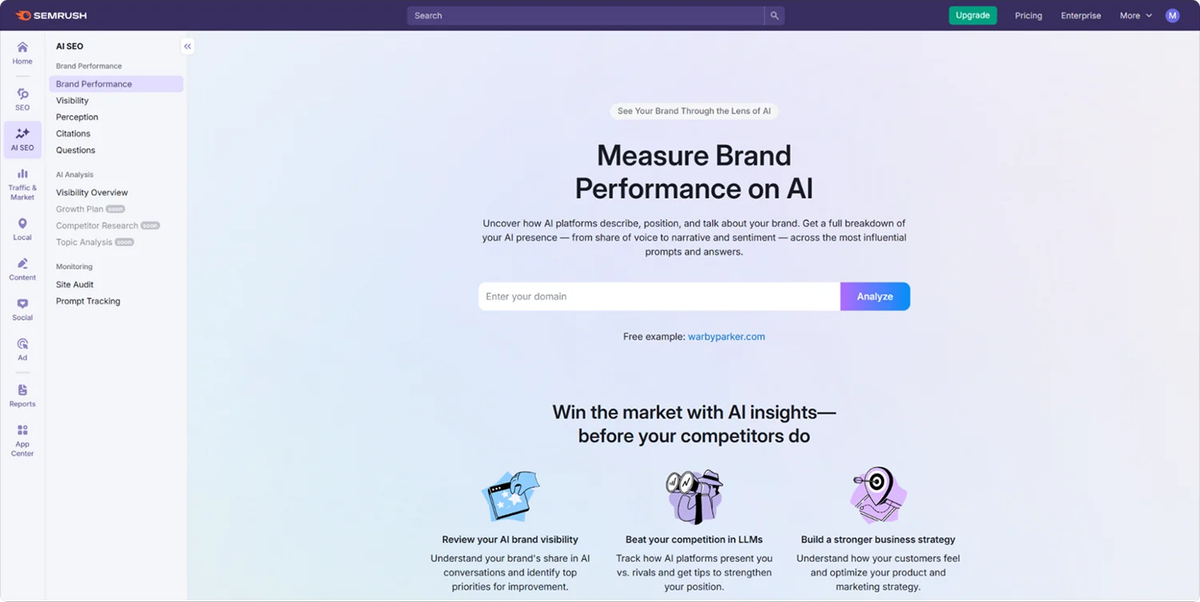
Semrush AI Visibility is a practical option for teams already using Semrush for search research and reporting. It combines domain-level AI visibility and competitor research with daily custom-prompt tracking and a site audit for AI readiness.
The Base offer is $99/month per domain, billed annually, with 25 custom prompts and one Brand Performance domain. That domain-research capability is distinct from the recurring custom questions in Promptwatch. Semrush also offers an SEO + AI Search purchasing route, so an existing account may have a different upgrade decision.
The meaningful gain is consolidating work in a familiar search suite. The entry custom-prompt allowance is smaller than Promptwatch Essential's, and additional domains, users or reporting features affect cost. The pricing page lists extra users from $45/month and reporting add-ons separately. Large multi-brand programs have a custom Enterprise route, including API and governance; do not treat the Base subscription as the whole enterprise offering.
Specialized options worth considering
SEOmonitor: shared Google and AI Search reporting
SEOmonitor connects keyword-led Google reporting with AI-answer mentions, citations and snapshots. Its €79/month Starter includes 500 daily Google keywords, weekly AI tracking on one chosen model and ten AI articles. Pro is €299/month with 3,000 Google keywords, 1,000 AI tracking units and agency portfolio tools. One AI unit covers a keyword tracked weekly on one model; Claude uses five units. This suits teams consolidating SEO and GEO reporting. It changes both the question setup and frequency from Promptwatch's recurring prompt tracking, so the keyword totals are not an equivalent prompt allowance.
Goodie: monitoring with content optimization features
Goodie Core is $295/month billed annually, with 110 prompts, five models, one brand, two countries, two languages, unlimited seats and 50 optimization actions per month. It includes content-writing and optimization tools; Pro is $999/month on the same billing basis with 250 prompts and eight models. Goodie suits teams that want strategist support alongside monitoring, writing tools and a monthly allowance for optimization work.
Atomic AGI: a per-project analytics and agent workspace
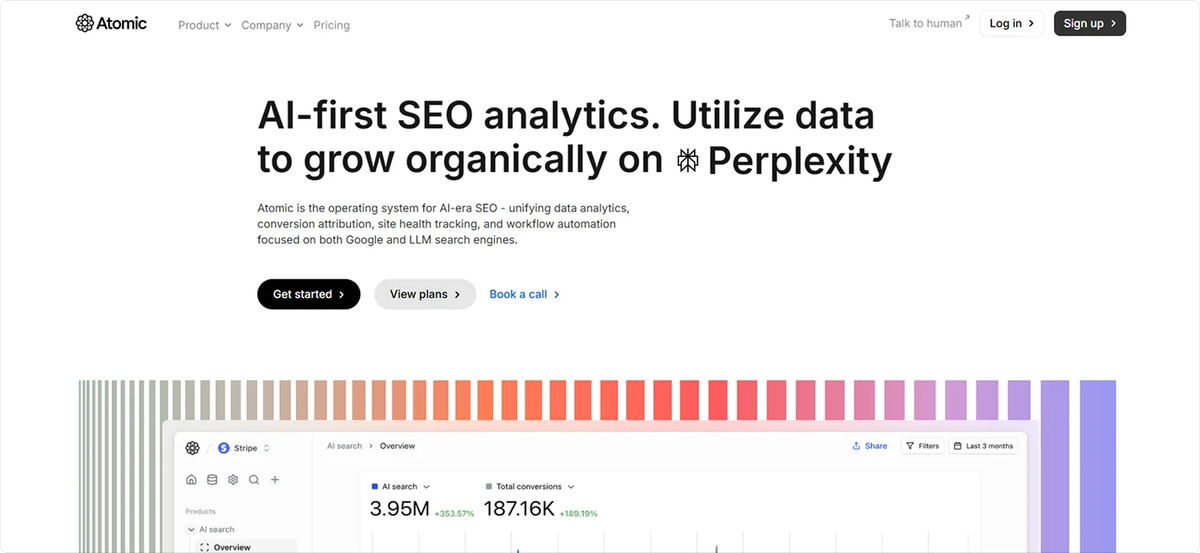
Atomic AGI combines SEO analytics, AI prompt tracking, site audits and agents. A free tier is available; Starter is $40/month per project, with up to three models, three competitors, MCP and custom reports. Team is $100/month per project, with expanded analysis and crawler logs. It is worth considering for a smaller project that needs analytics and automation together. Its per-project cost and competitor/model limits differ from Promptwatch's brand and agency packages; confirm the required collection cadence and prompt allowance in the selected configuration.
Morningscore: ChatGPT and Google-focused SEO work
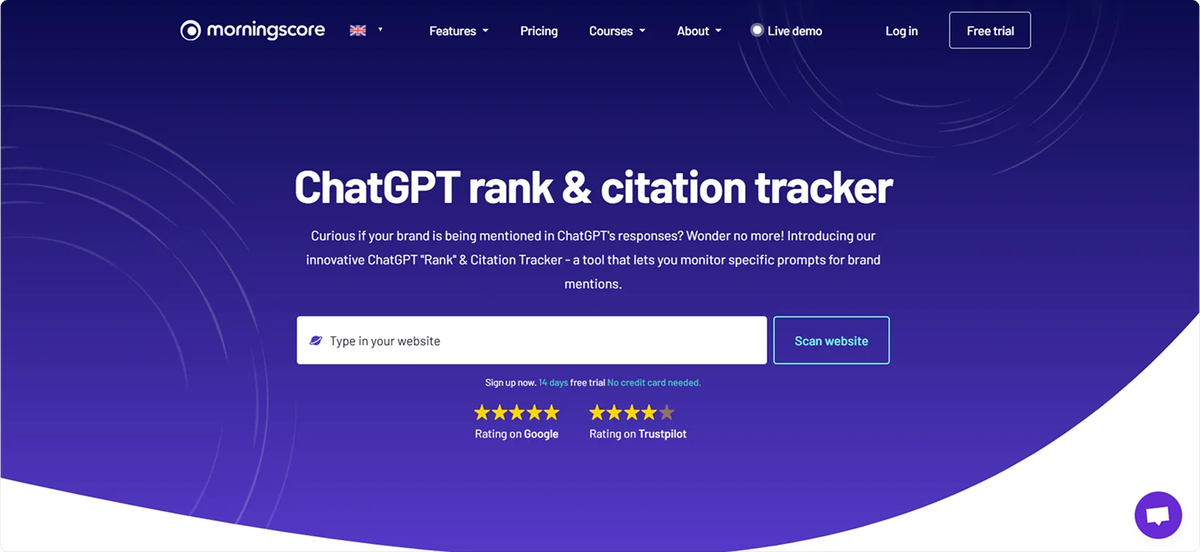
Morningscore brings ChatGPT and Google AI Overview tracking into an SEO workspace with site-health checks, keyword tracking, PDF reports and gamified tasks. Its current pricing table lists $69 Lite, $99 Business, $159 Pro and $299 Premium per month, with 100/1,000/5,000/20,000 AI credits. It fits teams that want those Google/ChatGPT tasks together. It offers a narrower engine focus than Promptwatch; the AI-credit allocation also supports AI tools, so it should not be read as a matching number of tracked prompts.
Brandwatch Search Intelligence: AI monitoring within wider market research
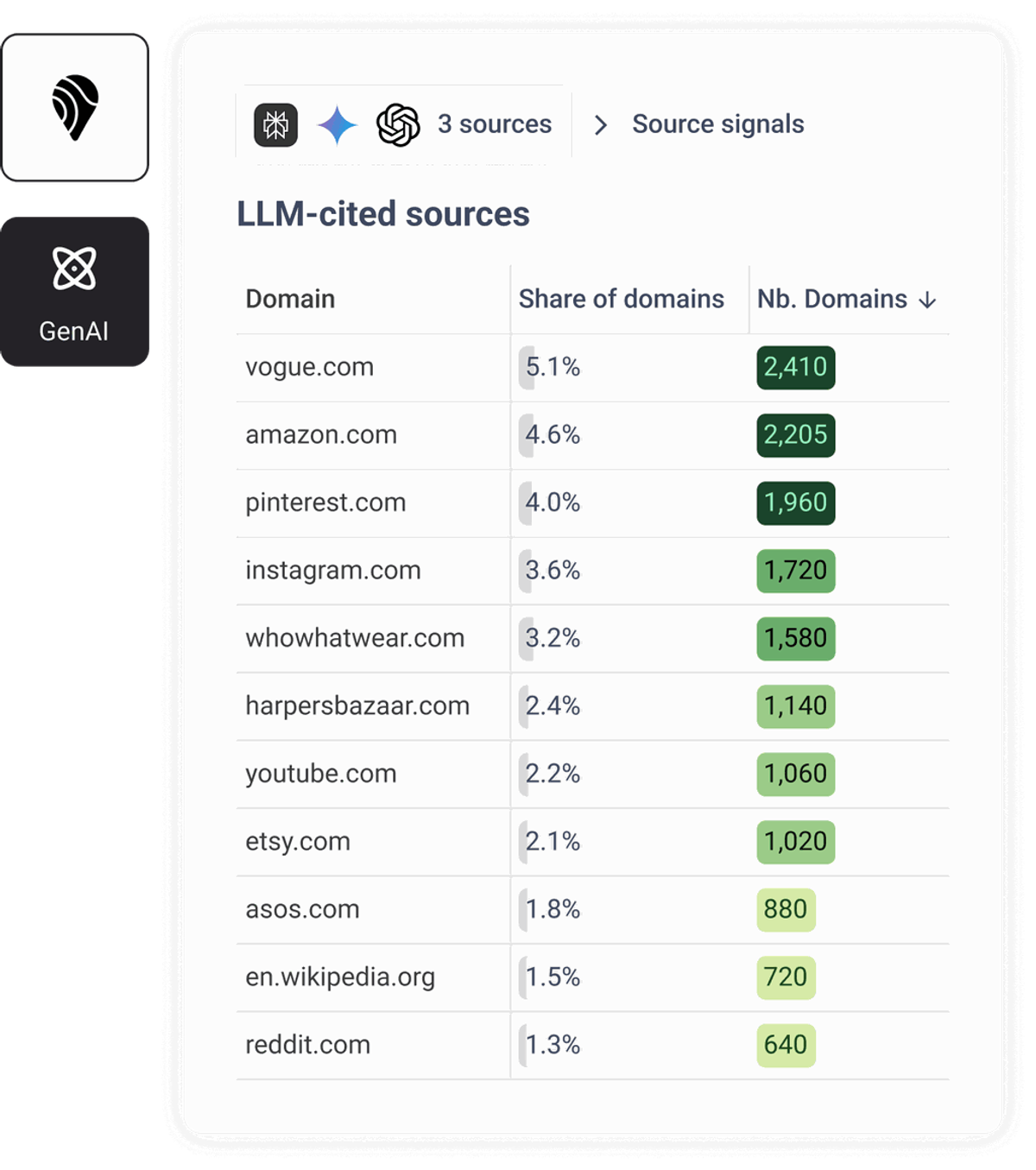
Brandwatch Search Intelligence, powered by Trajaan, combines traditional, social, shopping and generative-search research. It explicitly monitors how LLMs cite brands and competitors across prompts, including sentiment shifts, reputational risks and source signals.
Brandwatch suits research teams that want to connect AI brand representation with emerging customer questions and issues across search environments. Ask for a quote covering your required engines, tracking frequency and reporting access; the product page does not publish prices or tracking allowances.
Looking for XFunnel? Check the current HubSpot AEO offer
XFunnel was acquired by HubSpot. The current buying route to examine is HubSpot AEO: $50/month, or $45/month paid annually, for 25 prompts across ChatGPT, Gemini and Perplexity, with competitor/citation analysis and recommendations. Marketing Hub Pro and Enterprise offer a connected route using CRM context and content tools. This is relevant for existing HubSpot teams, but the standalone AEO subscription should not be confused with the full Marketing Hub package or Promptwatch's engine and content allowances.
Turn source findings into useful content work
The value of monitoring is being able to act on an identifiable finding. For the CRM question, read the answer and its cited pages before deciding to write another article. A competitor may be recommended because the answer discusses a requirement you support but do not explain clearly, such as multi-currency reporting or a particular integration. That gives your writer a useful brief: explain the requirement, show how it works and describe the relevant limits.
If a cited third-party page misstates your product, request a factual correction supported by the current product source. If your own page is unclear or outdated, improve it with current details, a practical example and supporting evidence. Keep useful comparisons, headings and FAQs; address actual crawling problems and use structured data where appropriate. These actions improve the information available to readers and search systems without guaranteeing a citation.
Revisit the same questions, engines and markets to observe what changed. Keep mention/citation trends separate from AI-referred sessions and CRM outcomes. For detailed implementation, use our content optimization guide.
Choose by team needs and reporting fit
For a single-brand program, compare Promptwatch Essential's four chosen models and API access with OtterlyAI's lower-cost entry plan, Peec's source analysis and Superlines' brand reporting and tiered data access. If article output is a priority, compare Promptwatch Professional and Writesonic's production allowances, engine coverage and workflows. For agencies or multi-brand teams, compare Promptwatch's pooled responses with Superlines' brand and market allowances, Peec's agency credits and the relevant tailored offers. Choose the configuration that fits the questions, markets, integrations and reporting your team actually needs.
If you are starting a new tracking program, document the questions, markets, engines and brand aliases from day one. If you are moving from another tool, export the historical answers and reports your subscription allows and retain them as a reference. Record differences in collection methods, engine coverage and metric definitions, and establish a new baseline when the measurements are not directly comparable. Do not assume a new vendor can import past data unchanged.
For teams considering Superlines, explore the platform or start a trial to see how visibility, citation and competitor evidence can inform work across your brands and markets.