


AthenaHQ is a Y Combinator-backed GEO platform for monitoring brand visibility across AI search. If you are looking for alternatives with broader platform coverage, deeper competitive intelligence, or different pricing, this guide compares the strongest options available in February 2026.
Below you will find a comparison table, detailed breakdowns of each tool, and a framework for choosing the right fit based on your team size and goals.
TL;DR
- AthenaHQ tracks AI search visibility across 8 LLMs and is priced at $295/month (currently offering $95 for the first month, 67% off). Common reasons teams explore alternatives include broader platform coverage, more advanced competitive benchmarking across LLMs, API integrations, MCP server support, or pricing flexibility.
- Superlines covers 10 AI platforms (including DeepSeek and Mistral) and offers MCP server integration for AI agent workflows, fan-out query analysis, and competitive gap detection with AI-powered action plans.
- Semrush and SE Ranking Visible are good choices for teams already embedded in those SEO ecosystems. Peec AI and Otterly.AI offer simpler, more affordable entry points.
- AI search is now a mainstream channel. Gartner predicts traditional search volume will drop 25% by 2026 as AI chatbots capture discovery intent. Tracking your brand across these platforms is no longer optional.
- The right alternative depends on your priorities: platform breadth, competitive depth, integration needs, or budget constraints. This guide helps you decide.
Why do teams look for AthenaHQ alternatives?
AthenaHQ offers solid AI search monitoring with support for 8 LLMs, content gap identification, and a Shopify integration for ecommerce teams. It is Y Combinator-backed and has been featured in Forbes and the Wall Street Journal.
That said, the AI visibility market is evolving quickly. According to Gartner, traditional search engine volume will drop 25% by 2026 as AI chatbots and virtual agents take over discovery. This means the tools used to track AI search need to keep pace with a rapidly expanding set of platforms and use cases.
Common reasons teams evaluate alternatives include:
- Platform coverage gaps: Some tools don't yet track newer LLMs like DeepSeek, Mistral, or Grok, which collectively reach millions of users.
- Competitive intelligence depth: Basic mention tracking versus full competitive gap analysis with actionable recommendations.
- Integration and API needs: Teams building automated workflows need REST APIs or protocol-level integrations like MCP servers.
- Pricing structure: Enterprise-only pricing may not fit smaller teams, while credit-based models require careful usage planning.
- Agency and multi-brand support: White-label reporting and multi-workspace management matter for agencies managing several clients simultaneously.
Quick comparison: AthenaHQ vs top alternatives
The following table summarizes the core differences between AthenaHQ and its main alternatives. Pricing is directional and based on publicly available information as of February 2026. Always verify on vendor websites before purchasing.
| Tool | Best for | AI Platforms Tracked | Starting Price | Key Differentiator |
|---|---|---|---|---|
| AthenaHQ | GEO teams, ecommerce (Shopify) | 8 LLMs | $295/mo | Y Combinator backed, Action Center, Shopify integration |
| Superlines | Brands and agencies needing competitive intelligence | 10 LLMs | Free trial available | MCP server, fan-out query tracking, competitive gap analysis |
| Semrush AI Visibility | Teams already using Semrush for SEO | 6+ LLMs | Included with Semrush plans | Integrated with keyword research and rank tracking |
| SE Ranking Visible | Budget-conscious teams | 4+ LLMs | From $99/mo | Affordable entry point with clean interface |
| Peec AI | Quick AI mention monitoring | 3+ LLMs | Free tier available | Fast setup, modular add-ons, 115+ languages |
| Profound | Enterprise analytics teams | 3+ LLMs | $99/mo | Conversation-level insights, research-grade data |
| Otterly.AI | Content teams tracking citations | 5+ LLMs | From $49/mo | Content-level citation tracking, visual reports |
Feature and pricing comparison of AthenaHQ and leading alternatives. Pricing based on publicly available data as of February 2026.
The 7 best AthenaHQ alternatives for AI search visibility
1. Superlines
Best for: marketing teams and agencies that need decision-grade AI search intelligence across the widest range of platforms.
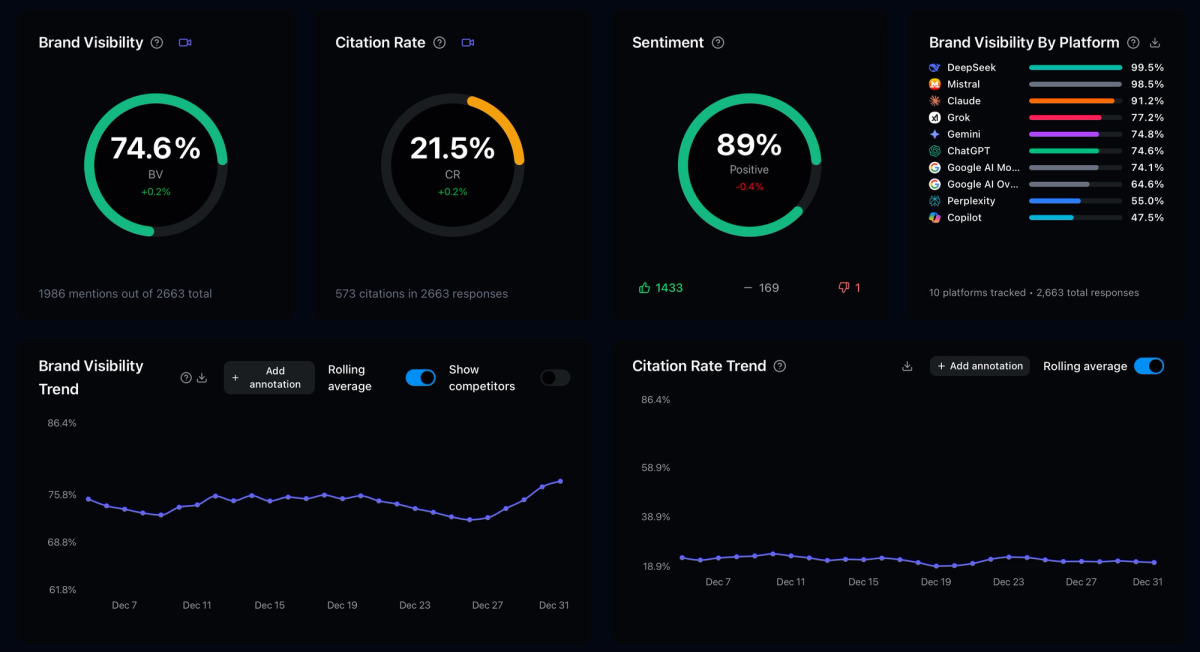
Superlines monitors brand visibility across 10 AI platforms: ChatGPT, Gemini, Perplexity, Google AI Overviews, Google AI Mode, Claude, Copilot, Grok, DeepSeek, and Mistral. It tracks real front-end interfaces rather than relying solely on API approximations, which means the data reflects what users actually see when they query an AI assistant. According to Superlines' own research on 1.5 million AI search citations, citation behavior varies significantly between platforms, making multi-platform coverage a critical factor.
What stands out:
- Fan-out query tracking: See exactly what web searches LLMs perform when answering a user's question. This reveals the hidden keyword universe that determines which pages get retrieved and cited.
- Competitive gap analysis: Identify which prompts competitors win and receive AI-powered strategic recommendations for closing the gap.
- MCP server and REST API: Integrate AI search data directly into AI agent workflows or build custom dashboards. The MCP server makes Superlines data accessible to tools like Cursor, Claude Desktop, and other AI coding assistants.
- Multi-market, multi-language tracking: Monitor visibility across different countries and languages simultaneously.
- White-label reporting: Agencies can brand reports and dashboards for their clients.
Choose if: you need the broadest AI platform coverage (10 platforms) with deep competitive intelligence and developer-friendly integrations.
Skip if: you only need basic mention tracking for one or two AI platforms.
2. Semrush AI Visibility Toolkit
Best for: teams already invested in the Semrush ecosystem who want AI visibility alongside traditional SEO tools.
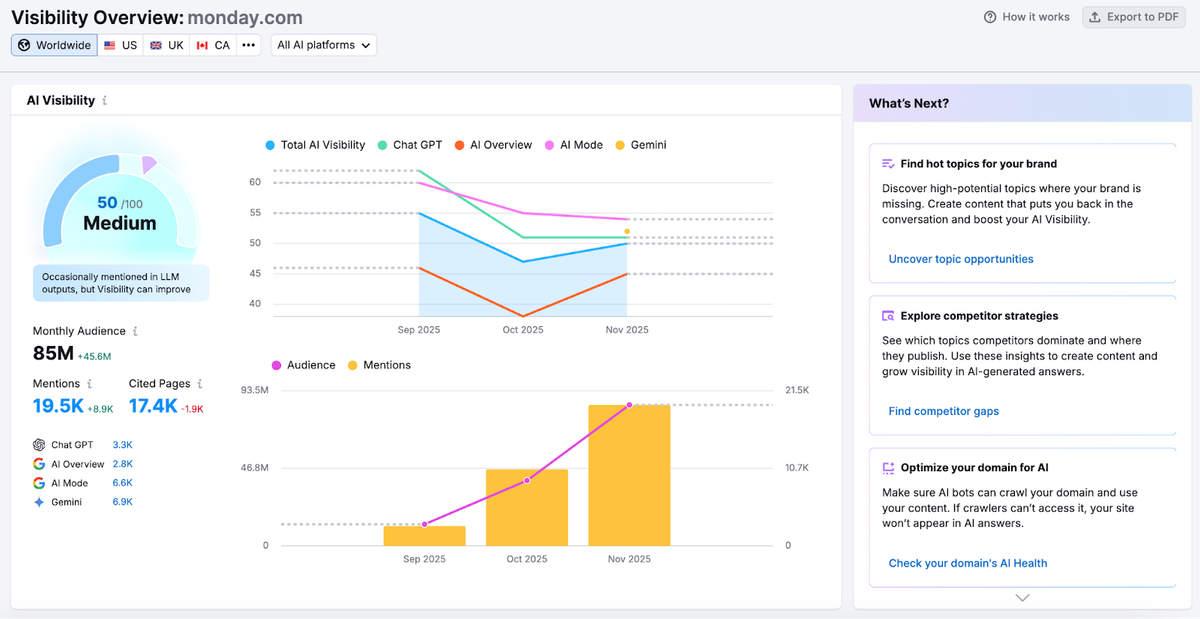
Semrush added AI visibility tracking to their established SEO platform, making it accessible for teams already using their keyword research and rank tracking tools. Their AI visibility tools article provides a useful comparison of the broader market.
What stands out:
- Integrated with Semrush's keyword research, backlink analysis, and position tracking
- Tracks across ChatGPT, Gemini, AI Overviews, Perplexity, Claude, and Copilot
- Content optimization recommendations based on AI visibility data
- Familiar interface for existing Semrush users
Choose if: you already pay for Semrush and want AI visibility without adding another tool.
Skip if: you need dedicated AI search intelligence with competitive gap analysis or MCP integrations.
3. SE Ranking Visible
Best for: small to mid-size teams looking for affordable AI visibility tracking.
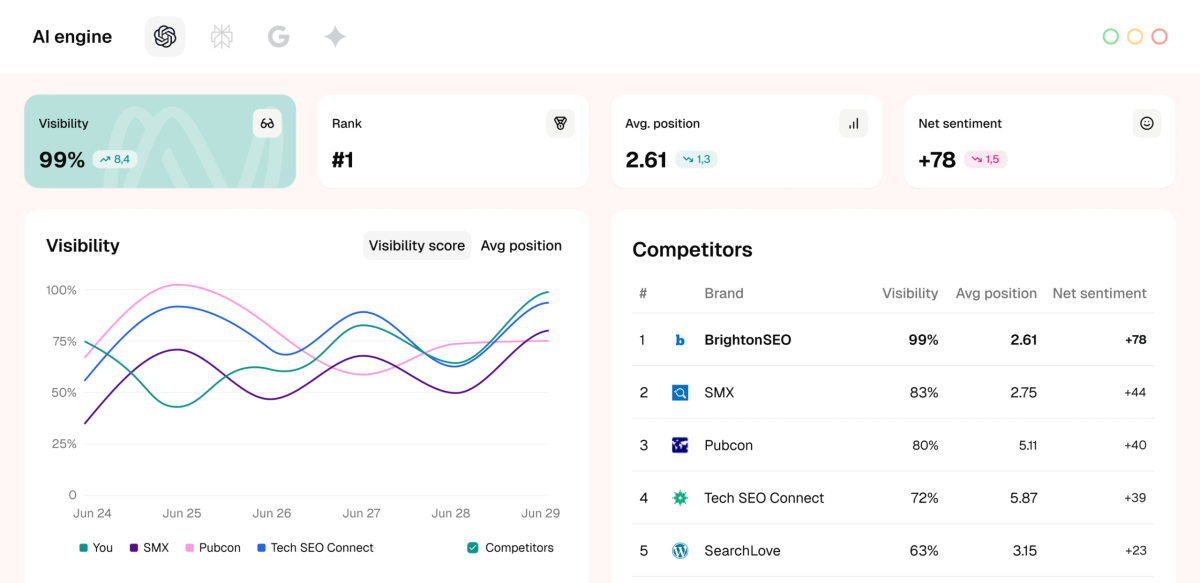
SE Ranking's Visible product provides solid AI visibility tracking at a lower price point than most alternatives. The interface is clean and straightforward, making it easy for teams new to AI visibility to get started.
What stands out:
- Affordable starting price compared to enterprise-focused tools
- ChatGPT, Gemini, AI Overviews, and Perplexity tracking
- Side-by-side competitor comparison views
- Integrates with SE Ranking's broader SEO platform
Choose if: budget is your primary concern and you need core AI visibility tracking without enterprise complexity.
Skip if: you need wide LLM coverage or advanced competitive intelligence features.
4. Peec AI
Best for: global brands needing quick, multi-language AI mention monitoring.
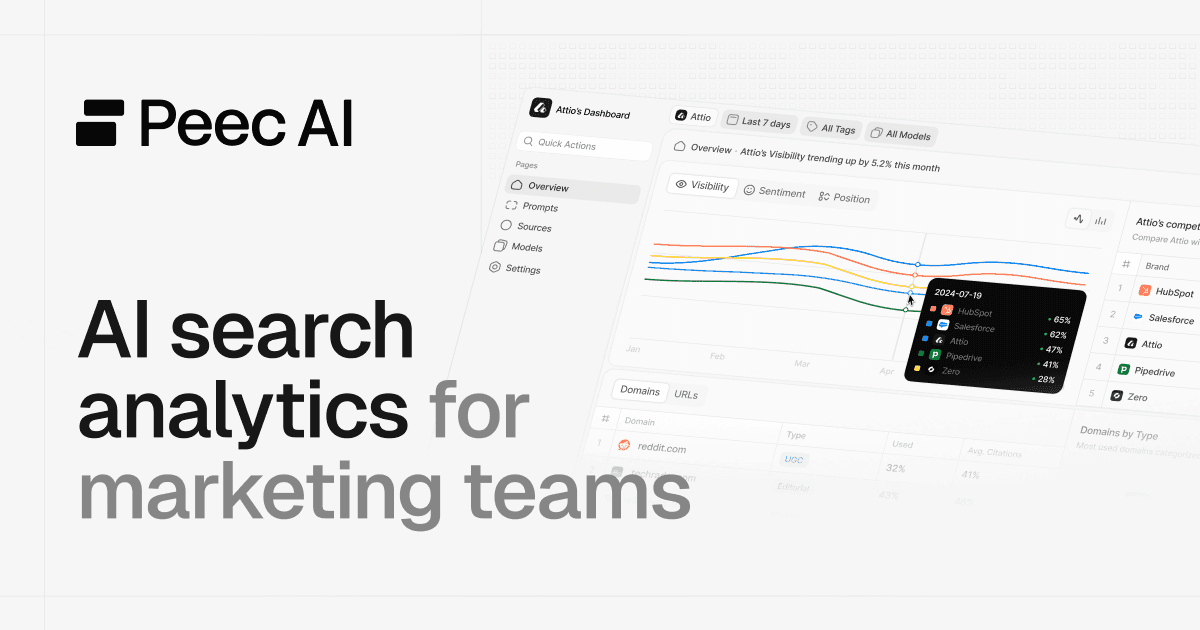
Peec AI focuses on monitoring brand mentions across AI platforms with daily tracking and support for 115+ languages. As of March 2026, Peec AI offers separate pricing for brands and agencies. Brand plans start at €85/mo (Starter: 50 prompts, 3 models), with Pro at €205/mo and Advanced tiers for multi-country tracking. Agency bundles are available for multi-client management. 15% annual discount on all plans.
What stands out:
- Daily cross-engine tracking with unlimited seats
- 115+ language support for global brands
- Modular add-ons for specific LLMs
- Clean dashboards and straightforward exports
Choose if: you want quick multi-language mention monitoring with flexible pricing.
Skip if: you need citation-level analysis, fan-out query tracking, or strategic recommendations.
5. Profound
Best for: enterprise teams needing conversation-level AI search analytics.
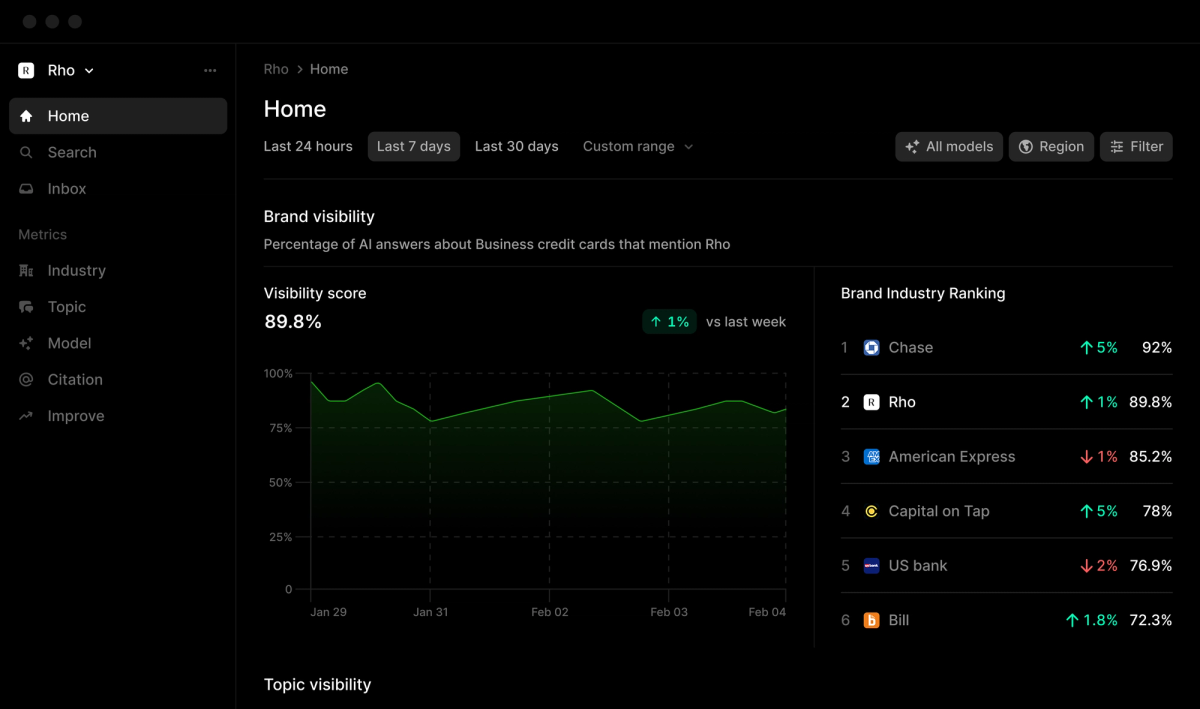
Profound offers deep analytics on what people ask AI platforms and how those conversations unfold. It goes beyond surface-level mention tracking to provide research-grade insights into AI search behavior. For a detailed comparison, see our article on the best Profound alternatives.
What stands out:
- Conversation-level insights into AI search queries and trends
- Research-grade analytics for planning and monitoring
- Enterprise reporting and data exports
- Strong for understanding intent behind AI search patterns
Choose if: you need deep research-level analytics for planning and have an enterprise budget.
Skip if: you need multi-brand management or agency-focused features.
6. Otterly.AI
Best for: content teams focused on understanding which pages get cited.
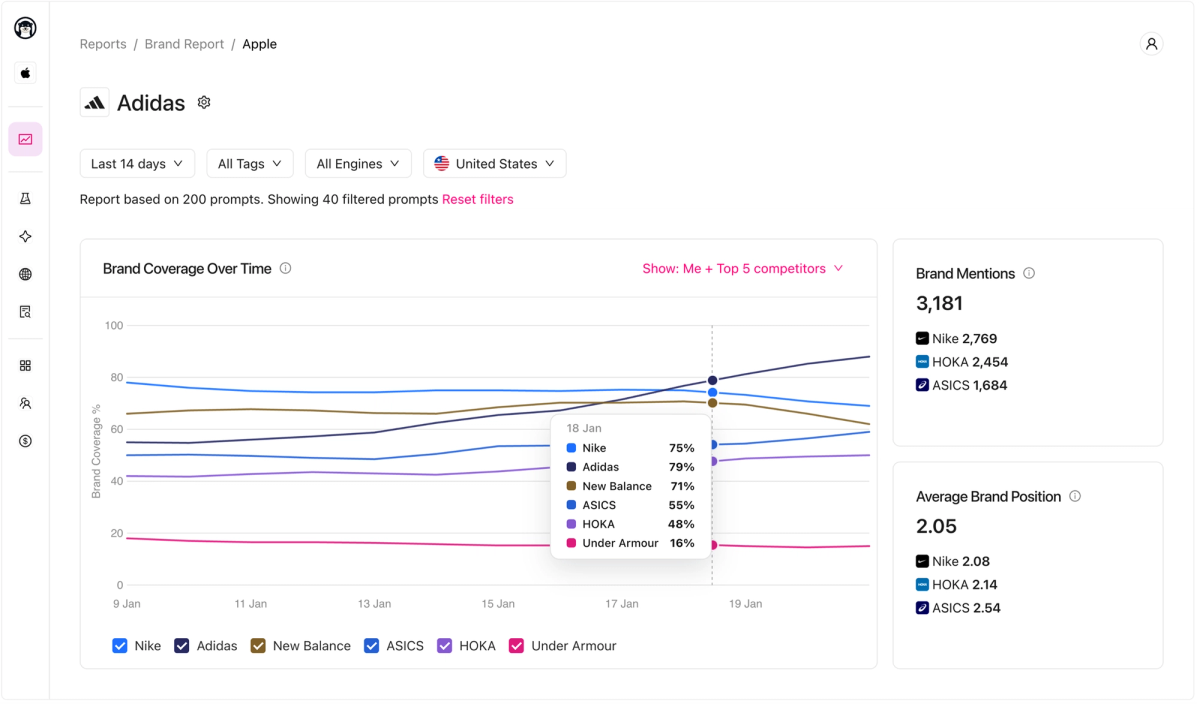
Otterly.AI takes a content-first approach to AI search monitoring. Rather than just tracking brand mentions, it focuses on which specific URLs are being cited in AI responses, helping content teams understand what resonates with AI platforms.
What stands out:
- Content-level citation tracking (which URLs get cited)
- Google AI Overview and ChatGPT monitoring
- Visual citation reports with KPI-style dashboards
- Fast setup with low entry price
Choose if: your primary goal is understanding which content performs in AI search.
Skip if: you need competitive gap analysis or API integrations.
7. Rankability AI Analyzer
Best for: SEO-focused agencies that want AI search tracking tied to a content optimization workflow.
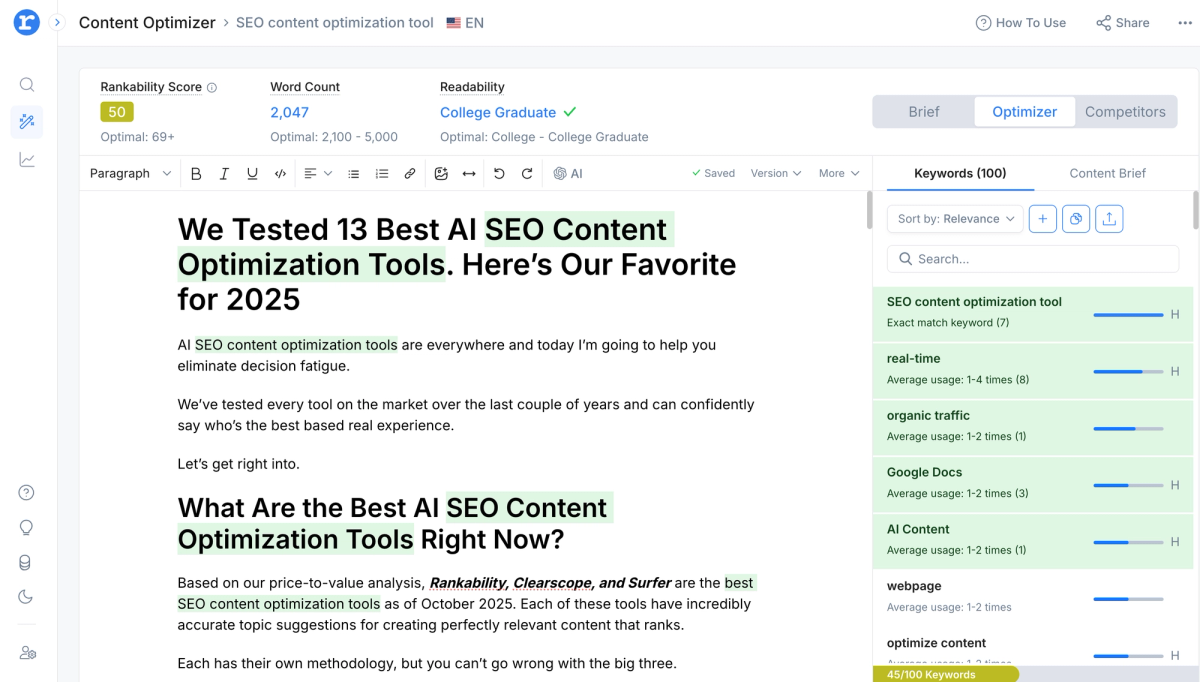
Rankability bridges traditional SEO rank tracking with AI search visibility monitoring. Their AI Analyzer connects tracking to a content workflow: research, AI brief, in-editor optimization, and monitoring in one stack.
What stands out:
- Combined SEO and AI visibility in one platform
- Content Optimizer integration for fixing identified gaps
- Prompt-level testing with competitive citation comparisons
- Built for agency workflows with multiple clients
Choose if: you want "see and fix" in one stack with traditional SEO and AI search combined.
Skip if: you need the widest AI platform coverage or enterprise-grade competitive intelligence.
How to choose the right AthenaHQ alternative for your team
The AI search visibility market is maturing quickly. Research from BrightEdge shows that 84% of marketers already report measurable traffic changes tied to AI search adoption, and pages updated within 60 days are 1.9x more likely to appear in AI answers. Choosing the right tool depends on where your team sits today and where it needs to go.
For solo or small teams (keep it lean):
Start with Peec AI (€85/mo Starter for Brands) or SE Ranking Visible (from $99/mo) to establish a baseline. If weekly trends and a simple score are enough, these provide a solid starting point without significant investment.
For agencies managing multiple clients:
Superlines or Rankability are the strongest fits. Superlines offers white-label reporting and multi-brand management with the broadest platform coverage. Rankability provides a "see and fix" workflow. For a deeper look at agency use cases, see our guide on how agencies use AI search data.
For enterprise teams (depth and governance):
Profound provides research-grade insights for teams with budget for premium analytics. Superlines offers enterprise-grade data infrastructure with MCP server and REST API integrations for teams building automated workflows.
What should you evaluate when comparing AI visibility tools?
Before committing to any platform, consider these five factors. According to a Yext study, 75% of people now use AI search tools more than they did a year ago, and 43% use them daily. The tool you choose needs to keep pace with this growing behavior.
- Platform coverage: How many AI platforms does the tool track? ChatGPT alone is not enough. Google AI Mode, Perplexity, Gemini, and Claude each reach different audiences.
- Data accuracy: Does the tool track real user-facing interfaces or rely solely on API calls? API outputs can differ from what users actually see.
- Competitive intelligence: Can you see which prompts competitors win? Do you get actionable recommendations for closing gaps, or just raw data?
- Integrations and APIs: Does the tool offer REST APIs, MCP server support, or native integrations with your existing marketing stack?
- Pricing transparency: Are credits unlimited or metered? Do prices scale linearly with usage, or are there sharp tier jumps?
How to migrate from AthenaHQ to another platform
Switching tools does not need to be disruptive. The key is maintaining measurement continuity. According to AirOps research, AI answer content changes roughly 70% of the time for the same query, so expect some baseline volatility regardless of which tool you use.
- Export your prompt list: Recreate your tracked prompts in the new tool and group them by buyer intent to rebuild baselines quickly.
- Run a 30-day overlap: Maintain both platforms simultaneously for a month to compare visibility deltas and validate data accuracy.
- Normalize sampling cadence: Match or exceed your prior sampling frequency. Daily tracking is important for volatile categories, weekly is fine for stable niches.
- Validate exports: Confirm that CSV, API, and reporting exports from the new tool align with your internal reporting structure.
One data point worth noting: across ChatGPT, Perplexity, Copilot, and AI Mode, around 80% of cited URLs do not rank in Google's top 100 results for the original query (Ahrefs, August 2025). This underscores why dedicated AI search tracking matters and why traditional rank trackers alone are insufficient.
Making the right choice for your AI search visibility
AI search is not a future channel. It is a current one. According to Superlines' 50 AI Search Statistics for 2026, around 93% of AI search sessions end without a website click. This means being visible inside the answer itself is now the primary visibility metric, not traditional click-through rates.
AthenaHQ built a solid foundation for GEO monitoring, and teams that need its specific combination of features (Shopify integration, Action Center, Y Combinator network) may find it remains the right fit. For teams that need broader coverage, deeper competitive intelligence, or more flexible integrations, the alternatives in this guide offer strong options.
To see where your brand currently stands across all major AI platforms, Superlines offers a free trial that tracks brand visibility, citation rate, and competitive positioning across 10 AI search engines. It provides a practical starting point for understanding your current AI search presence and identifying opportunities.
For a broader look at the AI visibility tools landscape, see our comparison of the best AI visibility tools in 2026. And if you want to understand the optimization strategies behind the data, our GEO best practices checklist covers the full workflow.
Competitive Benchmarking: Which AthenaHQ Alternative Lets You Benchmark Your Brand vs Competitors Across LLMs?
One of the most common reasons teams search for AthenaHQ alternatives is the need to benchmark their brand against competitors across multiple LLMs, not just track their own visibility. Here is how the top tools compare specifically for competitive benchmarking.
Superlines vs Peec AI: Head-to-Head for AthenaHQ Replacement
Peec AI currently dominates this prompt at 56.78% visibility, making it the most visible AthenaHQ alternative in AI search results. Here is how it compares to Superlines for teams evaluating their options.
Migration from AthenaHQ: Step-by-Step Checklist
Switching from AthenaHQ does not need to be disruptive. Use this checklist to maintain measurement continuity and avoid data gaps during the transition.