


Best Semrush alternatives for AI Search in 2026
The best Semrush alternatives for AI Search are purpose-built GEO (Generative Engine Optimization) platforms that track, analyze, and improve how your brand appears inside AI-generated answers across ChatGPT, Perplexity, Gemini, and other AI platforms. Unlike Semrush's AI Toolkit, which extends its SEO suite with basic AI tracking, these dedicated tools deliver deeper visibility data, real-time citation analytics, and competitive intelligence designed specifically for AI Search.
AI search is transforming how people discover information. Around 93% of AI Mode searches end without a click and AI Overviews are driving a dramatic rise in "zero-click" searches, where users get their answers directly on Google’s results page. Industry research by ahrefs confirms that when AI Overviews are shown, zero-click rates spike, and organic click-through rates to websites can drop by up to 34% to 58%. As this shift accelerates, brands that optimize for AI visibility will lead customer discovery.
This guide reviews the 10 best GEO tool alternatives for Semrush and breaks down their features, pricing, and limitations to help you choose the right platform for your business.
What is GEO analytics and why does it matter?
GEO analytics measure how AI platforms like ChatGPT, Gemini, and Perplexity read, interpret, and reference your content, showing how visible your brand is inside AI-generated answers, not just on search result pages.
Before reviewing the leading tools, it helps to understand what GEO analytics actually measure and why they're becoming essential for marketers.
Generative Engine Optimization (GEO) focuses on structuring, formatting, and enhancing digital content so it gets picked up, summarized, or cited by AI-powered search engines and large language models. Unlike traditional SEO, which is about ranking web pages for specific keywords, GEO analytics measure how often and how accurately AI assistants use your information when responding to user prompts.
Traditional search engines list ranked results. AI search platforms create conversational answers that combine data from multiple trusted sources. This shift introduces a new set of success metrics: visibility, citation frequency, and contextual accuracy, all of which matter more than ranking positions.
Most importantly, GEO analytics make your actions measurable. They show the direct impact of your optimizations, helping you identify which improvements increase AI visibility and accelerate brand recognition inside generative search.
In short, GEO analytics tell you what traditional SEO cannot: whether AI systems actually understand, trust, and promote your brand when people ask questions in generative search.
The new success metrics that actually matter
Traditional SEO focused on rankings, clicks, and backlinks. GEO success requires tracking entirely different metrics:
- Brand Visibility: The percentage of AI responses that mention your brand.
- Brand Mention Rate: How often LLMs mention any brand in the prompts you track.
- Brand Share of Voice: Your share of total brand mentions within the prompts you track.
- Citation Rate: How often LLMs cite your website as a source, including linked or referenced content.
- Sentiment Distribution: The tone and context of brand mentions (positive, neutral, or negative), though most are typically positive or neutral.
- Competitive Positioning: How your brand ranks and is represented compared to competitors in AI responses.
Tracking these signals provides the clearest picture yet of how AI systems interpret and present your brand online.
Why traditional SEO tools fall short
Traditional SEO tools focus on keyword density, backlinks, and page rankings, metrics that no longer reflect how discovery works in the AI era. Generative models prioritize fact-checked, multi-source, and semantically rich content over keyword repetition. To understand the key differences between SEO and this new approach, read our guide on Is GEO Like SEO?
Unlike Google's relatively stable rankings, AI platforms generate dynamic responses that can change from one query to the next. This makes static ranking data far less useful. Instead, trend analysis, prompt coverage, and visibility patterns across AI platforms have become the new performance indicators. That's why GEO analytics now form the foundation of modern visibility tracking. They help brands measure the impact of every optimization and understand how AI systems actually perceive, interpret, and present their content in answers.
Why tools that use only APIs can miss real AI answers
One of the biggest technical differences between GEO tools is how they collect answer data. Some tools rely only on model APIs, while others capture the real answers that users actually see in the UI. This matters a lot for Brand Visibility and Citation Rate.
A recent Surfer study compared API-based AI visibility data with answers scraped from real ChatGPT and Perplexity interfaces and found that the two often differ. This means tools that rely on APIs only may not reflect what real users actually see in AI answers.
Below we review the best Semrush alternatives in 2026 so you can choose a GEO platform that fits your team and helps you grow Brand Visibility and citation rate in AI Search.
Top 10 Semrush alternatives for AI Search in 2026
Here's a breakdown of the top 10 alternatives to Semrush in 2026, including pricing, strengths and limitations for each platform.
1. Superlines
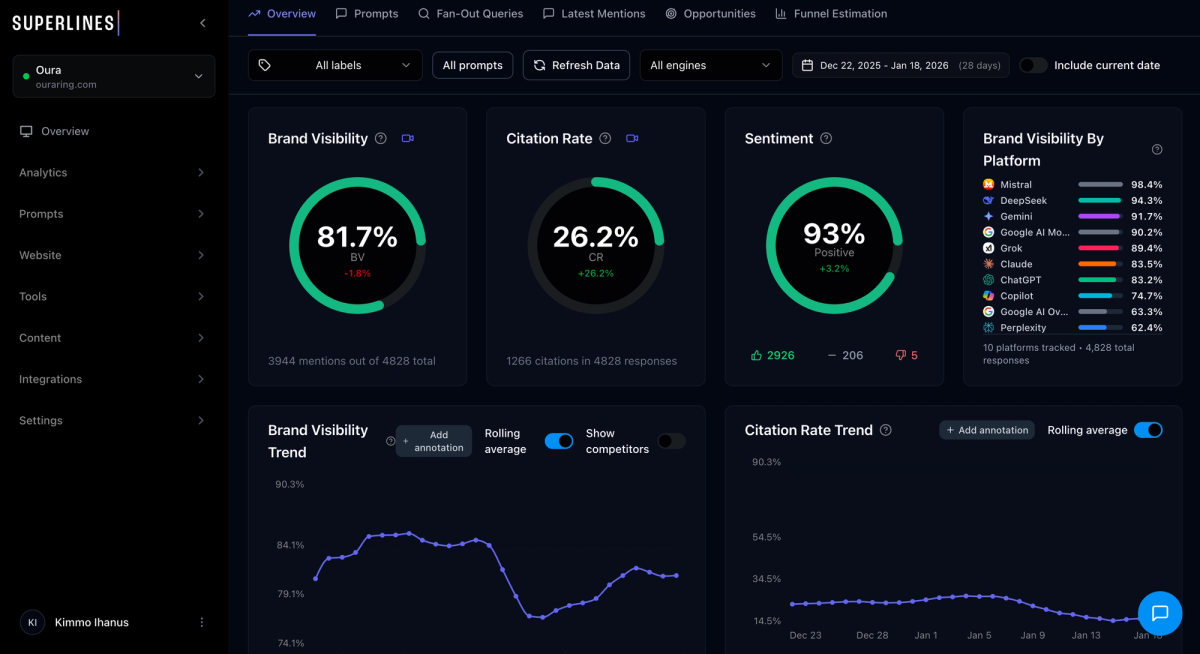
Superlines is a Generative Engine Optimization (GEO) platform that helps marketing teams and agencies see how often AI engines mention and cite their brand, then turns that visibility data into clear opportunities instead of static dashboards. It uses real answer data from live AI interfaces across 10 major AI engines and exposes the same structured dataset through the in-app Superlines Agent and an MCP server, so teams can work with the data inside their own AI assistants and agents when they want to surface insights and take action.
Key features
- Cross-platform AI visibility tracking: Track brand visibility and competitive share of voice across 10 major AI engines, including ChatGPT, Perplexity, Claude, Microsoft Copilot, Google AI Mode, Google AI Overviews, Gemini, Mistral, DeepSeek and Grok.
- Citation and competitor gap analysis: See which pages are cited, where competitors win citations instead of you, and which third-party articles or UGC threads (for example Reddit, Quora) are worth pursuing for additional mentions.
- AI Traffic and AI Bot Analytics: Monitor how AI crawlers from OpenAI, Anthropic, Google, Perplexity and others actually visit your site, which pages they read, and how that traffic connects to human visits at prompt and URL level.
- Automated prompt management and Search Query Fan-Out insights: Superlines helps you discover, test and clean up prompts, and surfaces the Search Query Fan-Outs (LLM keywords) that AI assistants run behind the scenes so you see which topics, queries and sources drive your AI visibility.
- Built for multi-brand, multi-market workflows: Unlimited brands and domains per workspace, with market-specific languages and competitors. Designed for agencies and in-house teams that manage several services and regions in one view.
- Surface insights with interactive agents: Access the full visibility dataset through the in-app Superlines Agent or via the MCP server, so your own AI assistants can analyze results, suggest next steps, and support day-to-day GEO workflows.
Pricing (updated May 2026)
- Starter plans from €79/month (monthly billing) or €69/month (annual billing), including 3 AI engines of your choice, 50 tracked prompts, unlimited seats and competitors, daily tracking, AI Traffic plus AI Bot analytics, Action Center, and MCP server access — the most comprehensive Starter tier for AI Search Optimization.
- Growth tier at €379/month adds 300 prompts, 7 brands, API access, and advanced features.
- The new Pro tier at €199/month adds 150 prompts, 3 brands, data exports, and monthly site audits for mid-market marketing teams, while higher tiers add more volume, API access, longer data retention, and advanced tools like large-scale crawling and content support.
Limitations
- Tiered Feature Access: Advanced tools like full historical data are reserved for Enterprise and Agency partnership plans.
- Data Limits: Entry-level plans have more restrictive data retention and prompt volumes.
2. AthenaHQ
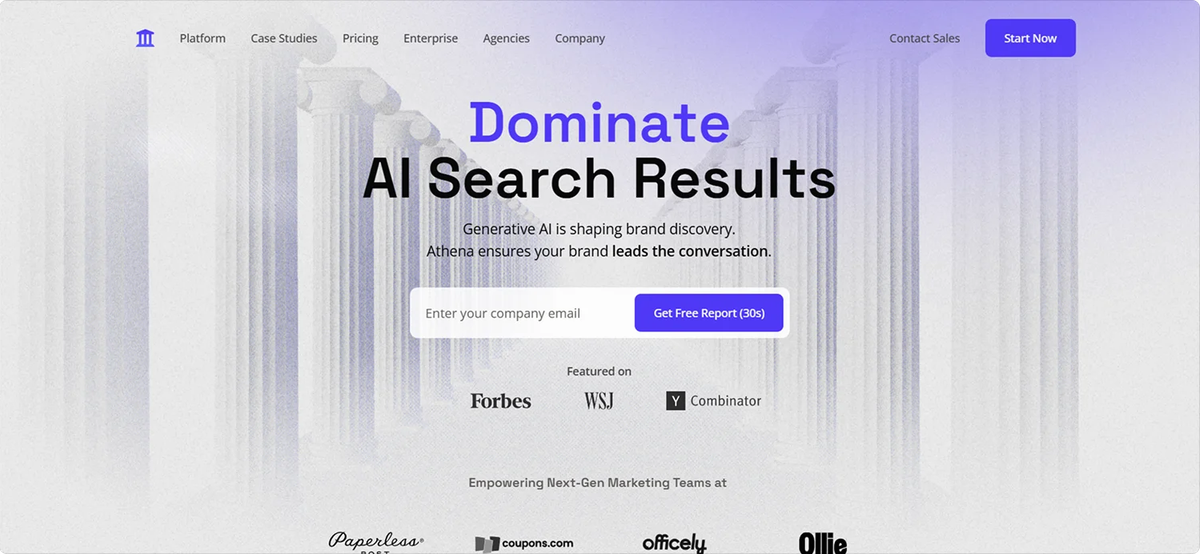
Founded by former Google Search and DeepMind experts, AthenaHQ stands at the forefront of Generative Engine Optimization, helping companies see how their brand appears on generative engines like ChatGPT, Perplexity, Claude, Gemini, and more.
Key Features:
- Multi-Engine Coverage: Comprehensive tracking across ChatGPT, Gemini, Claude, Perplexity, Copilot, Google AI Overviews, and emerging platforms
- Competitor Benchmarking: Side-by-side visibility comparisons with detailed competitive intelligence
- AI-Generated Action Center: Tailored recommendations for content restructuring, FAQ optimization, and strategic outreach
- Traffic Attribution: GA4 integration for full-funnel AI search analytics
Pricing (updated May 2026): AthenaHQ has restructured to two tiers. Self-Serve starts at $95/month for the first month (67% off the $295 list price), with 3,600 credits per month (1 credit = 1 AI response). Enterprise pricing is custom. Annual billing saves 17%.
Limitations:
- Credit system can become expensive with extensive monitoring. Learning curve for smaller teams new to GEO.
- Relies on API output instead of capturing real answers from AI interfaces.
3. Profound
Profound has evolved from a promising GEO platform to a market-defining company pioneering the concept of "marketing to Superintelligence." Its $35M Series B funding (right after their $20M Series A in June of 2025), led by Sequoia Capital, positions it as the definitive solution for organizations serious about preparing for an AI-first marketing future.
Key Features:
- Answer Engine Insights: Comprehensive brand visibility tracking across ChatGPT, Perplexity, Gemini, and other major AI platforms.
- AI Crawler Analytics: Agent Analytics reveals how AI crawlers access your content, provides a technical analysis to ensure your site is optimized for AI indexing, and uses a GA4 integration to attribute traffic and conversions to AI search.
- Shopping Intelligence: Shopping Insights shows your products' visibility in ChatGPT, identifies keywords to target, analyzes competing products and retailers, and helps you refine how your products are represented.
- Conversation Explorer: Live monitoring of trending topics and user query patterns across AI platforms.
- Content Workflows: Automated content creation and optimization pipelines for AI visibility.
Pricing (updated May 2026): Profound's pricing page no longer displays public pricing. Based on third-party sources, plans appear to start around $499/month. Contact their sales team for current pricing and plan details.
Limitations:
- Many advanced features, such as Agent Analytics, Shopping Insights and full multi-engine coverage, are locked to higher-tier plans.
- As a bigger, enterprise-focused platform, it usually requires more setup and is slower to adapt than some of the newer GEO solutions.
- Public information about the external datasets they "buy" to power their platform is limited, so teams that need full data lineage and methodology transparency will have to ask detailed questions during procurement.
If you're comparing enterprise GEO solutions, check out our Best Profound Alternatives 2026 guide for a full breakdown of competing platforms.
4. Writesonic GEO
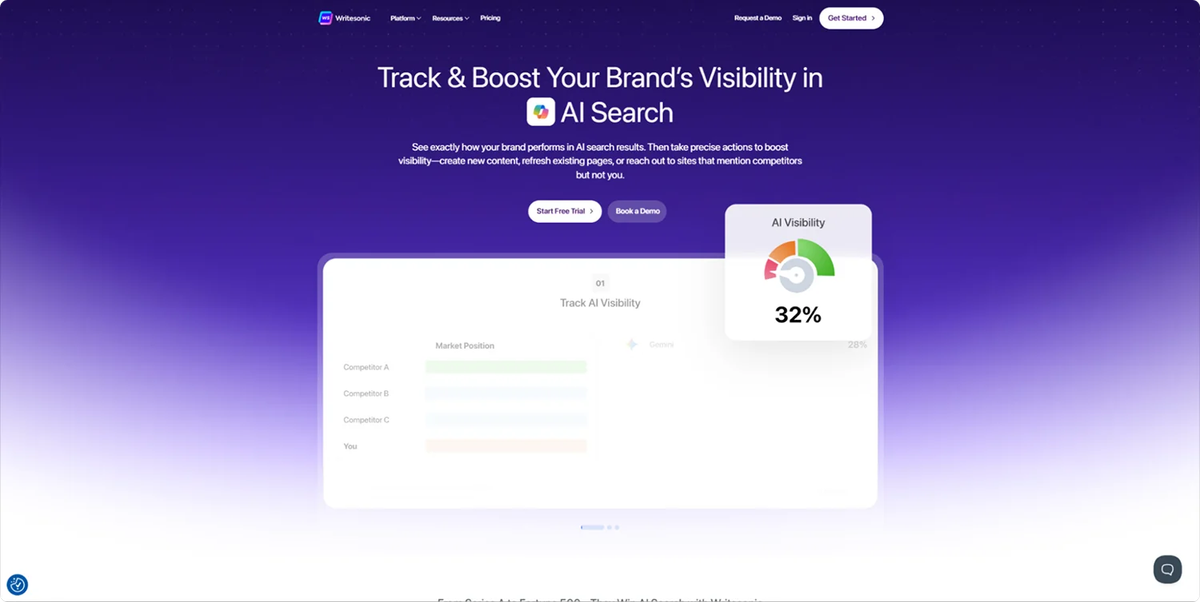
Writesonic's Generative Engine Optimization tool is designed to optimize your brand's presence across major AI platforms like ChatGPT, Claude, Google AI Overviews, and more.
Key Features:
- AI Traffic Analytics: Tracks visits from AI crawlers (like ChatGPT, Claude, Perplexity, Gemini) that traditional analytics miss, showing which pages they access and how they drive human traffic through citations.
- Brand Presence Explorer: Visibility scoring, competitive benchmarking, and sentiment tracking across AI platforms
- Integrated Optimization: Built-in content creation and SEO tools for immediate implementation of insights
- Citation Gap Analysis: Identification of missed opportunities with actionable recommendations
Pricing (updated May 2026): Writesonic has restructured into five tiers: Lite ($49/month), Standard ($99/month), Professional ($249/month), Advanced ($499/month), and Enterprise (custom). GEO tracking features require the Professional plan or above ($249/month minimum). The Standard plan at $99/month does not include GEO capabilities.
Limitations:
- GEO features limited to higher-tier plans, which signals an SEO-first platform focus. Newer platform with less market presence than established competitors.
- Relies on API output instead of capturing real answers from AI interfaces.
5. Scrunch AI
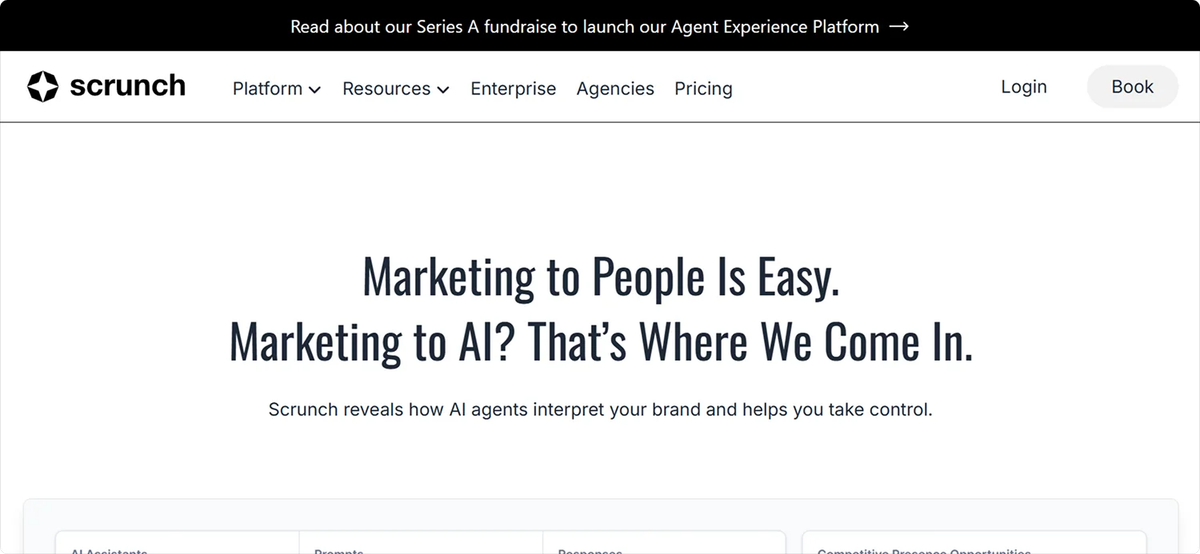
Scrunch is a GEO tool that helps enterprise teams detect and correct false narratives in AI-generated answers. If you're concerned about outdated product information, competitor-biased summaries, or broken messaging, it provides the right solutions for your team.
Key Features:
- Misinformation Detection: Proactive identification of false or outdated brand information in AI responses
- Narrative Control: Tools for correcting and improving brand representation across AI platforms
- Journey Mapping: Understanding how AI agents navigate websites and interact with content
- Knowledge Hub: Library of owned and third-party content that AI engines cite
Pricing (updated May 2026): Scrunch has simplified to two tiers. Core starts at $250/month (125 prompts, 4 LLMs tracked). Enterprise pricing is custom and includes 9 LLMs. The previous three-tier model (Starter/Growth/Pro) has been replaced.
Limitations:
- Higher pricing for basic features. Limited market presence compared to established platforms.
- Relies on API output instead of capturing real answers from AI interfaces.
- In our tests with established enterprise clients, creating an AI-friendly version (AXP feature) on a separate domain did not increase AI bot traffic, largely because that domain lacked authority. The idea is interesting, but so far we have not seen consistent visibility gains in real production use.
6. XFunnel
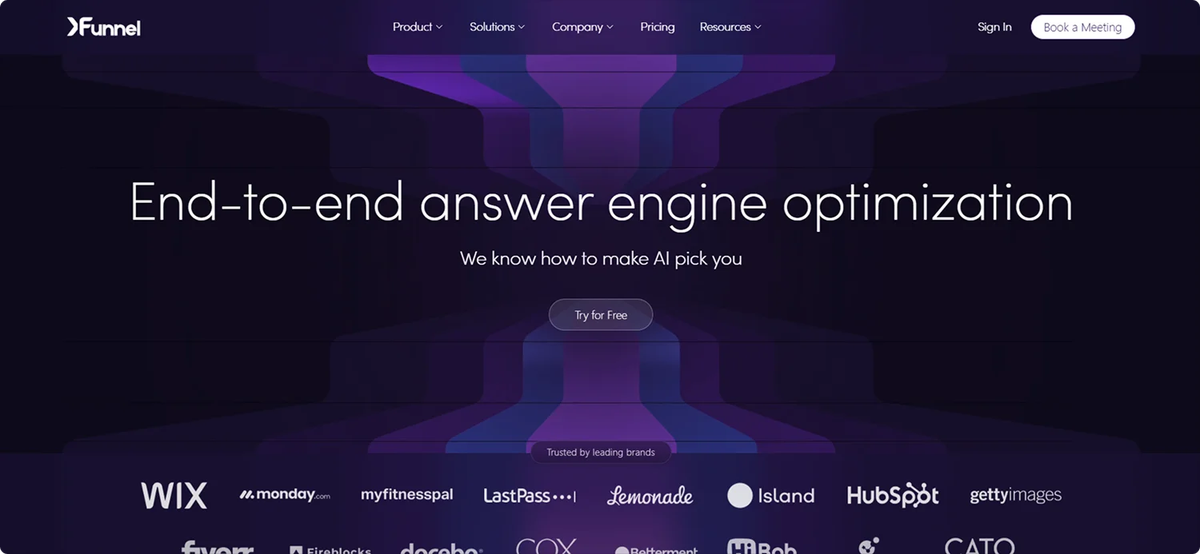
XFunnel (Acquired by HubSpot) combines AI visibility analytics with actionable playbooks and expert support. What makes this tool unique is its "Buying Journey Analysis" dashboard. This GEO analytics feature breaks down your brand's AI visibility at each stage of the funnel, from awareness to consideration to conversion.
Key Features:
- Buying Journey Analysis: Funnel-specific visibility tracking from awareness to conversion
- Query Analytics: Discovery of top AI prompts by intent, region, and persona
- Dedicated Analyst Support: Tailored recommendations and optimization playbooks
- Real-Time Visibility Tracking: Cross-platform monitoring with trend analysis
Pricing (updated May 2026): XFunnel now offers a Free Starter plan ($0, one-time 50-query audit) alongside custom Enterprise pricing. Contact their team for ongoing plan details.
Limitations:
- Custom pricing lacks transparency. Limited public information about platform capabilities.
- Relies on API output instead of capturing real answers from AI interfaces.
7. Peec AI
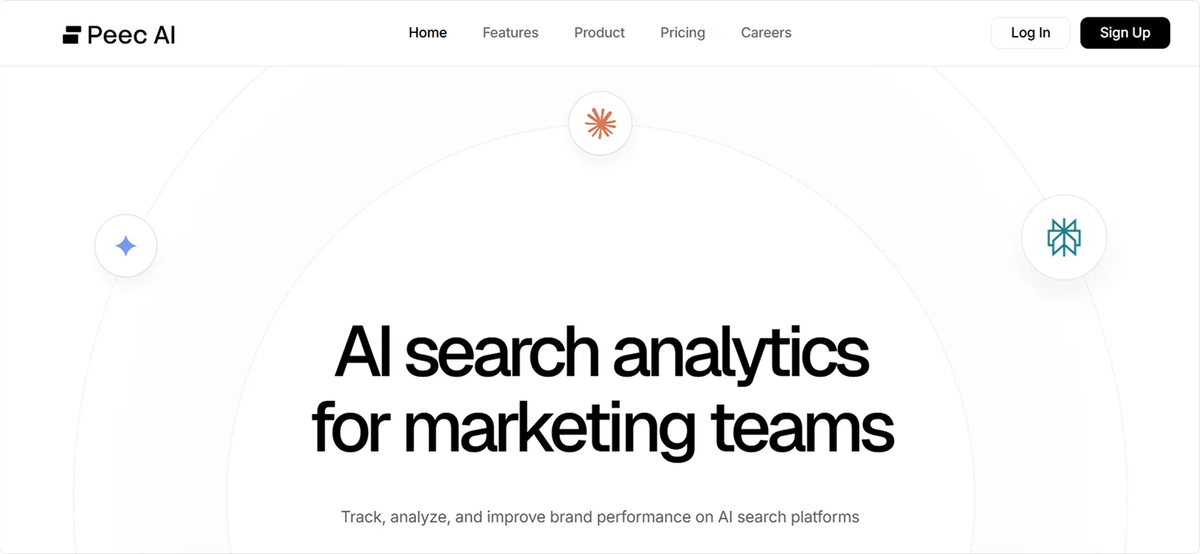
Peec AI offers comprehensive multi-platform monitoring with a focus on real-time alerting and competitive benchmarking across AI search engines. In November 2025, Peec AI raised $21M in Series A funding ($29M total), signaling strong investor confidence in the GEO analytics space.
Key Features:
- Real-Time Alerts: Instant notifications when brand visibility changes for specific prompts
- Multi-Platform Coverage: Tracking across ChatGPT, Perplexity, Gemini, and emerging AI platforms
- Source Attribution Analysis: Understanding which websites influence AI responses about your brand
- Regional Tracking: Geographic-specific monitoring for international brands
Pricing (updated February 2026): Starter: €85/month (50 prompts), Pro: €205/month (150 prompts), Advanced: €425/mo (350 prompts) Enterprise with custom pricing. Annual billing saves 15%.
Limitations: Limited optimization recommendations compared to competitors. Higher pricing for advanced features and many other features sold as add-ons.
8. Otterly AI
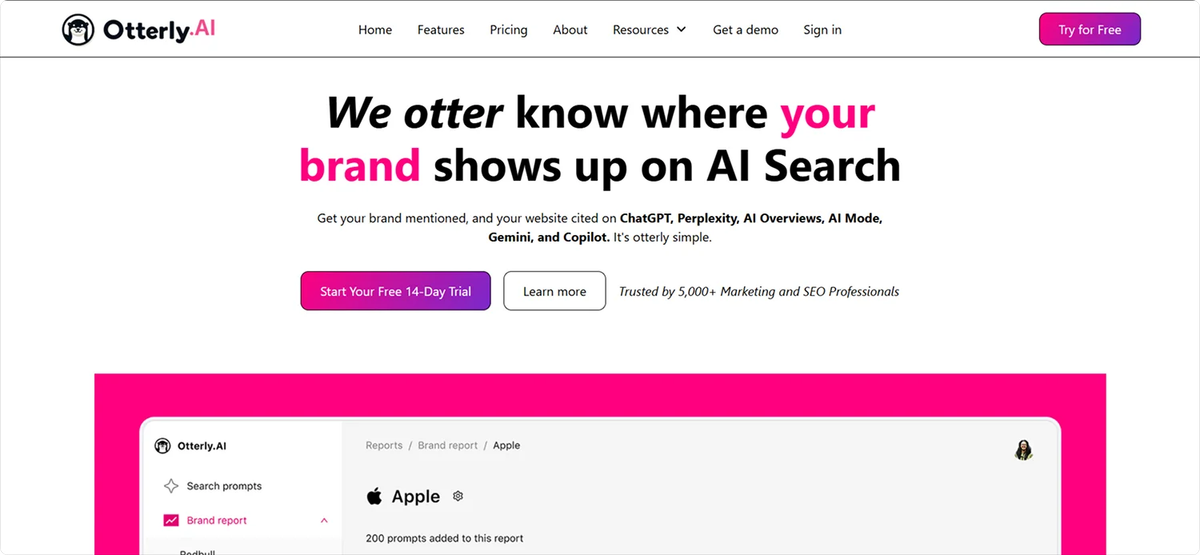
Otterly is the most practical GEO tool for teams focused on prompt-level AI rankings. It lets you monitor where your brand appears in AI-generated responses, track link citations, and discover high-impact prompts your audience is using.
Key Features:
- Prompt Discovery: AI keyword research tool that transforms traditional keywords into conversation-based queries
- Automated Link Citation Detection: Real-time tracking when AI platforms reference your content with links
- Brand Visibility Index: KPI showing brand prominence across AI search engines over time
- GEO Audit: Comprehensive analysis with SWOT, competitor assessment, and tactical recommendations
Pricing (updated May 2026): Lite: $29/month (15 prompts, up from 10), Standard: $189/month (100 prompts), Premium: $489/month (400 prompts). The previous "Pro" tier at $989/month has been replaced by Premium at a significantly lower price point. Annual billing saves 15%. Note: AI Mode and Gemini tracking are paid add-ons.
Limitations:
- Significant price jump between tiers. The leap from $29 to $189 monthly might be challenging for growing businesses. Limited advanced analytics compared to enterprise platforms.
- Relies on API output instead of capturing real answers from AI interfaces.
9. SEOmonitor
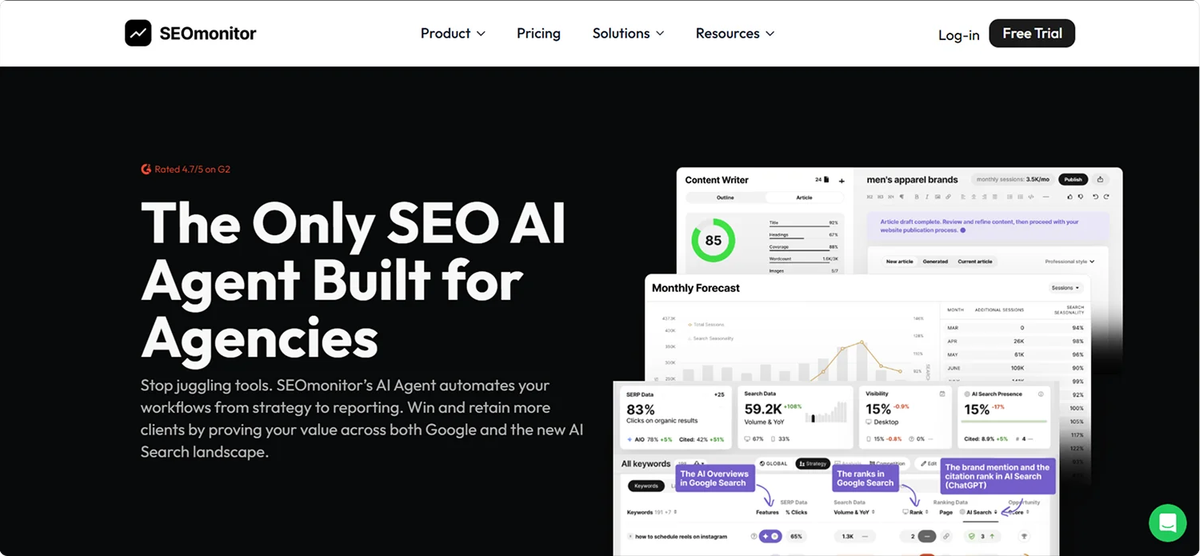
SEOmonitor is an in-depth AI Overviews and chatbot tracking tool with access to brand mentions, daily snapshots, and custom analyses. Plus, the platform allows dual-signal tracking (SEO+GEO).
Key Features:
- Response evolution tracking: You can check when and how your content gets added or left out in chatbot conversations
- Access raw data through API: This feature lets you access raw data to run large-scale reports
- Dual SEO and AI tracking capabilities
Pricing (updated May 2026): SEOmonitor now prices in EUR. Starter: €99/month (~$107) for 1,000 keywords tracked daily. Writer-Only: €25/month for 5 AI-written articles. Pro: €299/month (~$323) for 3,000 keywords tracked daily. AI Search tracking is available as an add-on at €19 per 1,000 keywords.
Limitations:
- Targets only agencies instead of in-house teams as well.
- Relies on API output instead of capturing real answers from AI interfaces.
10. Goodie AI
Goodie AI is offering a comprehensive answer engine optimization platform from tracking to optimization.
Key Features:
- AI-powered content creation tailored for AI search
- Comprehensive visibility tracking and analysis
- Topic research and keyword optimization
- Attribution tracking and ROI measurement
- Integration with popular content management systems
Pricing (updated May 2026): Goodie AI now offers public pricing starting at $295/month for the Starter plan. Higher tiers and Enterprise plans are available after a call.
Limitations:
- The UI shots shared on their website don't make the software look that actionable even if the UI does look sleek.
- Relies on API output instead of capturing real answers from AI interfaces.
These tools were selected based on their ability to track AI visibility, analyze LLM citations, support multi-platform coverage, and provide actionable optimization insights. Each was evaluated for usability, data transparency, and innovation in AI search analytics.
What is the GEO market outlook for 2026 and beyond?
The GEO analytics market is growing fast. Dimension Market Research estimates the generative engine optimization market at $1.09 billion in 2026, growing at a 40.6% CAGR. Meanwhile, eMarketer reports that 54% of US marketers plan to implement GEO within 3 to 6 months (January 2026 survey). These numbers explain why competition among GEO tools is heating up and why more flexible solutions are emerging fast.
Key trends for 2026 and beyond:
- Platform expansion: Major SEO providers such as Semrush, Ahrefs, Moz and BrightEdge will keep building or acquiring GEO analytics capabilities to prevent customer churn.
- Deeper feature sets: Expect more granular personalization tracking, understanding how AI responses vary by context, plus real-time content optimization and multimodal visibility across text, image and voice.
- E-commerce focused GEO: New tools will focus on agentic shopping experiences and product-level visibility, showing how your products are represented, compared and recommended across AI search engines.
- Market maturity: Industry benchmarks for AI visibility will emerge, making it easier to compare tools and measure impact over time.
- Vertical-specific solutions: Highly regulated sectors such as healthcare, finance and legal will see GEO tools with compliance-ready integrations and domain-specific metrics.
- Deeper integrations: GEO platforms will connect more tightly with CRMs, analytics suites and content management systems so AI visibility data becomes part of the full marketing workflow, not a separate dashboard.
- AI-first marketing mindset: As projections suggest LLM traffic could surpass traditional search by 2028, GEO will become as critical to marketers as SEO once was.
- Voice and visual discovery: AI search will extend further into voice assistants, visual recognition and AR-driven discovery, pushing GEO beyond purely text-based experiences.
- Predictive intelligence: Expect tools that forecast brand mention opportunities, suggest next-best content moves and automate updates based on real-time AI search data.
In this context, teams that choose deeper GEO analytics platforms today are better positioned to adapt and stay ahead as AI Search as a channel continues to grow.
How to secure your brand's visibility in AI Search
The shift from traditional search to AI-powered discovery is the biggest transformation in digital marketing since social media. Early adopters that invest in GEO analytics now will capture an outsized share of future visibility and growth.
Your Implementation Roadmap:
- Start Measuring Now: Choose a GEO analytics platform that fits your current budget, data needs, and way of working.
- Optimize Existing Content: Use GEO insights to refine your top-performing pages for AI visibility.
- Create AI-Native Content: Write and structure material specifically for AI models to read, understand, and cite.
- Scale and Systematize: Turn GEO optimization into a continuous process and expand into enterprise-level tools as results and confidence grow.
Success used to mean ranking number one on Google. In the AI era, there might not even be a "top result." The real goal is to become the answer, the brand AI systems trust and cite in their responses.
Tools covered in this guide reflect the latest advances in GEO analytics, but the field is changing quickly. The most important step is to start tracking and optimizing for AI search now, instead of waiting for the market to fully mature.
The future of search has already arrived; it just isn't evenly distributed yet. By adopting GEO analytics early, your brand secures a lasting advantage in visibility, credibility, and growth in an AI-driven world. Superlines helps teams track Brand Visibility, citation rate, and AI Share of Voice across 10 AI engines. Get started with Superlines today to see how your brand performs in AI search.